21 Sep 2026
When Jambi’s Identity Comes to Life in the Architecture of Sultan Thaha Airport
When Jambi’s Identity Comes to Life in the Architecture of Sultan Thaha Airport
Share:


Airport design is not only about organizing passenger departures and arrivals. For architects, a terminal also serves as the first gateway that introduces the character of a region through form, materials, spatial composition, and visual experience.
Sultan Thaha International Airport in Jambi demonstrates this approach through modern architecture combined with elements of local culture. The project was also a nominee for the Steel Architectural Awards Indonesia 2024, making it an interesting reference for contemporary transportation architecture.
One of its most recognizable elements is the roof composition. Multiple layers of roof planes create a dynamic visual rhythm while giving the terminal mass a strong identity. This demonstrates that a roof can serve a role beyond simply covering the building and can become an architectural element that helps define its character.
The Roof Becomes a Distinctive Feature of Sultan Thaha Airport
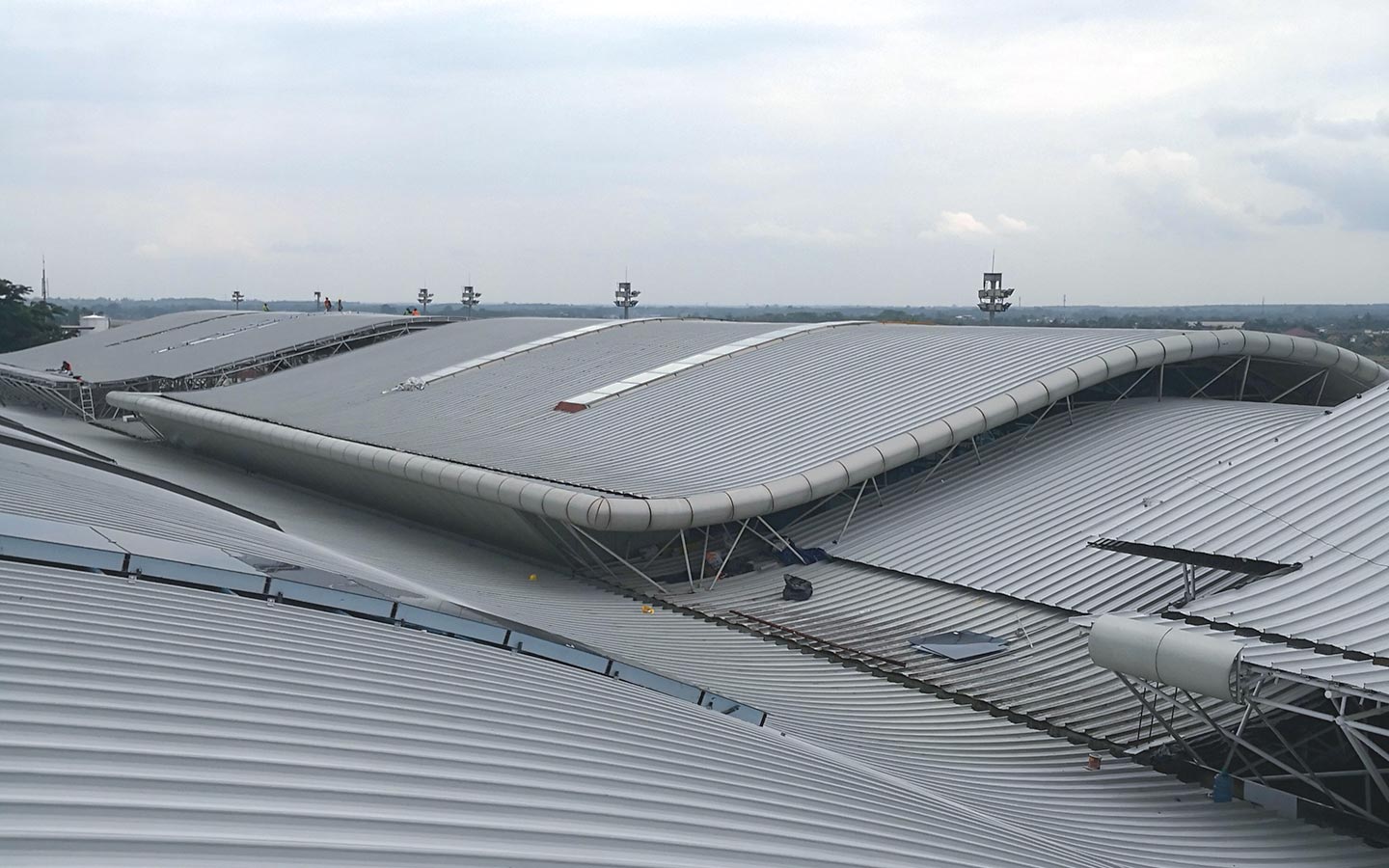
In large-scale transportation buildings, the roof is often one of the first elements visible from a distance. Its geometry and proportions therefore play an important role in shaping the image of the terminal.
Layered Roof Forms Create a More Dynamic Building
Sultan Thaha Airport uses several layers of roofing that create variations in lines and heights across the upper part of the building. This arrangement makes the terminal mass appear more dynamic while helping break down the scale of the relatively large structure.
This kind of approach is an important part of airport design, as wide-span spaces require a composition that remains visually legible to users. The roof can help establish a hierarchy between arrival areas, departures, entrances, and transitional spaces.
Architects can compare this approach with the design of Terminal 3 at Soekarno-Hatta Airport. The terminal demonstrates how wide-span roofing systems, materials, and spatial efficiency can be developed as an integrated architectural composition.
Local Culture Takes on a More Modern Expression at Sultan Thaha Airport in Jambi
Terminal architecture can serve as a representation of its region. The challenge lies in translating local culture into a spatial language that remains relevant to the needs of contemporary buildings.
When Modern Design Meets Jambi’s Identity
Sultan Thaha Airport combines a modern architectural approach with elements of Jambi culture through interior features, wall decorations, artworks, and other visual expressions. The result is a terminal that maintains a strong connection with its regional context.
This approach is closely related to neo-vernacular principles. Rather than simply copying traditional forms, neo-vernacular architecture interprets cultural values through forms and technologies that are more relevant to contemporary needs. This approach can be explored further through the discussion on the differences between neo-vernacular and vernacular architecture.
For airport design, this approach is particularly interesting because a terminal carries two identities at once: it is a transportation facility with high operational demands and also a gateway that introduces a region to passengers.
Circulation Forms the Foundation of the Airport Experience
An iconic form still needs to begin with function. In a terminal, design quality strongly depends on how easily passengers can understand and navigate their journey.
Passengers Need to Find Their Way Easily
Check-in zones, security screening, waiting areas, baggage claim, and access to transportation need to be clearly connected. Spatial orientation can be reinforced through openings, changes in height, lighting, structural elements, and ceiling forms.
In airport design, sightlines also need to be carefully considered. Users should be able to recognize their next destination through a combination of architecture and signage.
Studies of Sultan Thaha terminal construction also indicate the use of wide-span roof structures and roof insulation planning, illustrating how spatial requirements and construction systems need to be coordinated from the early design stages.
Roofing Materials Help Create Dynamic Forms
The more expressive the roof geometry, the more important the coordination between architectural concepts and material specifications becomes. Every change in roof plane affects the structure, joints, drainage, and connection details.
Materials Need to Follow the Roof Form
LYSAGHT® FLEX-LOK® forms part of the roof design that reinforces the airport’s architectural identity. Inspired by traditional Jambi houses, its layered roof profile creates harmony between traditional forms and modern styling, giving the building a distinctive character.
The LYSAGHT® FLEX-LOK® interlocking system offers a high level of precision with a smooth surface free from exposed screws. Each element is designed to maintain structural integrity and visual quality over the long term. Its presence further strengthens Sultan Thaha Airport’s role as a gateway that welcomes the world with the distinctive charm of Jambi—strong, refined, and meaningful.
In airport design, relatively lightweight materials can also be a consideration when used across large spans. Their application still needs to be coordinated with the structure, roof pitch, panel length, fastening systems, flashing, gutters, and maintenance access.
Several relevant parameters can be compared through material options for infrastructure projects, particularly because coastal environments, urban areas, and locations with varying levels of exposure may require different specification approaches.
Projects such as Raja Haji Fisabilillah International Airport demonstrate how terminal form, roof spans, and maritime conditions can become important considerations in aviation facilities.
Both projects were listed as finalists in the Lasting Beauty category, while Raja Haji Fisabilillah later received the award in that category in 2024.
Adapting Roof Color to the Scale of the Building
When selecting roof colors, architects need to consider the form of the roof planes, direction of light, façade, complementary materials, and surrounding landscape.
References to standard color options for roofs and walls also provide information on color characteristics and Solar Reflectance Index values that can form part of the material evaluation process.
In airport design, 3D visualization and mock-ups become important because a color viewed on a small sample may create a very different impression when applied across a large terminal roof span.
Important Elements in the Design of Sultan Thaha Airport
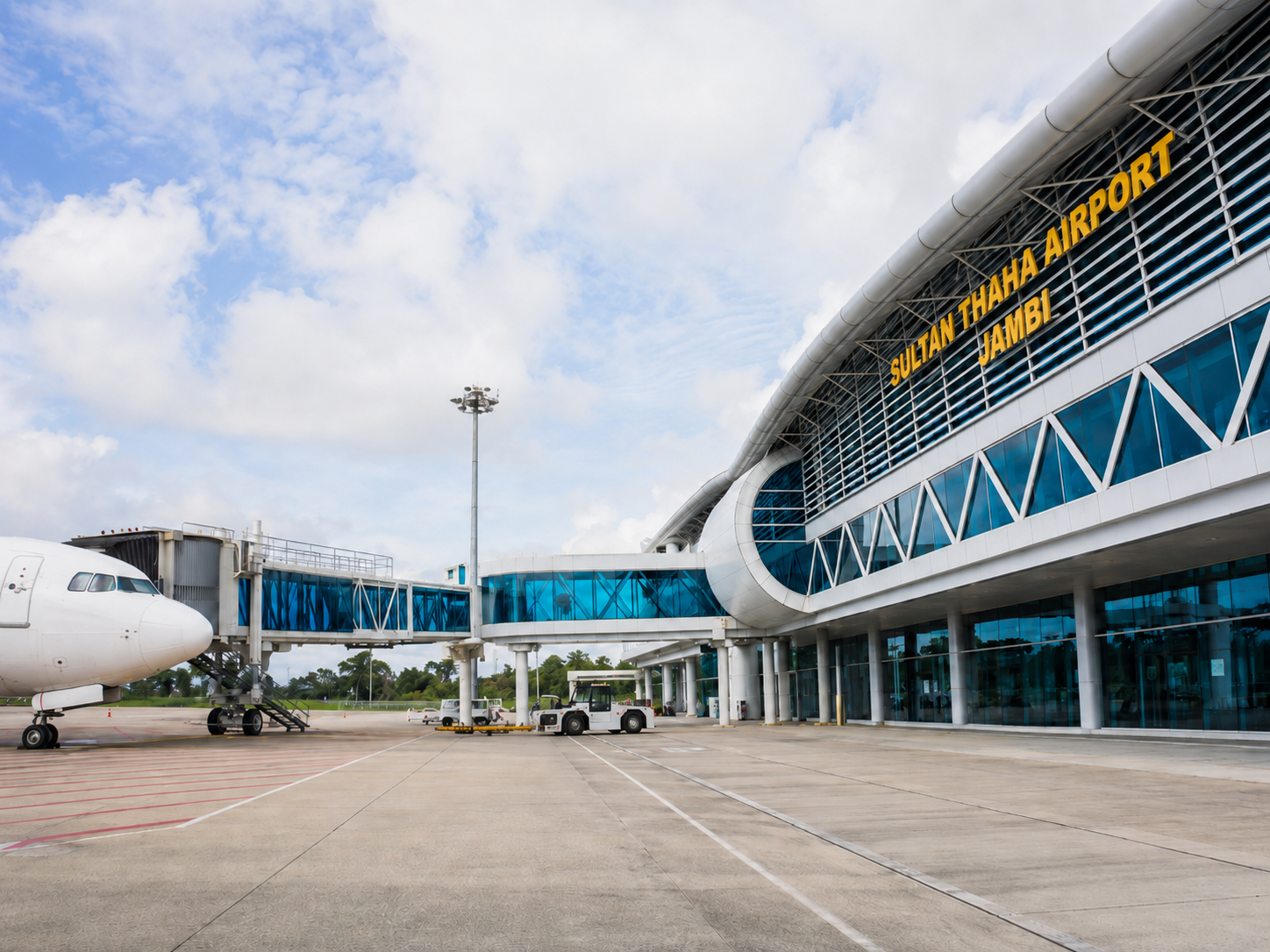
Several aspects of the project can serve as learning references for architects developing transportation facilities with strong local identities.
| Element | Application in the Design |
|---|---|
| Layered roof | Creates visual rhythm and helps establish the terminal’s identity. |
| Wide-span space | Supports terminal areas designed for large numbers of users. |
| Local identity | Translated through cultural elements, decoration, and visual works that represent Jambi. |
| Roofing material | Follows changes in geometry while becoming part of the building’s architectural expression. |
| Color | Helps shape hierarchy, character, and the visual legibility of the terminal mass. |
| Circulation | Connects arrival, departure, and passenger movement processes. |
| Design tools | BIM, CAD, SketchUp, and 3D visualization help coordinate form, structure, and detailing. |
The table demonstrates that airport design operates across multiple scales simultaneously, from user experience to the resolution of roof details.
Materials become one of the tools architects use to translate a concept into a built form. In transportation projects, considerations include aesthetics, form, environmental conditions, and operational requirements.
COLORBOND® Steel is a pre-painted steel material from BlueScope for roofing and wall applications. In 2026, the material marks 60 years as a global BlueScope brand, with technology continuing to evolve in response to architectural and construction requirements.
One of these technologies is Thermatech® Solar Reflectance Technology, which is designed to help reflect more solar energy in applicable colors. This technology should be considered together with roof form, insulation, ventilation, orientation, and spatial function, as a building’s thermal performance results from the entire system working together.
What Can Be Learned from Sultan Thaha Airport?
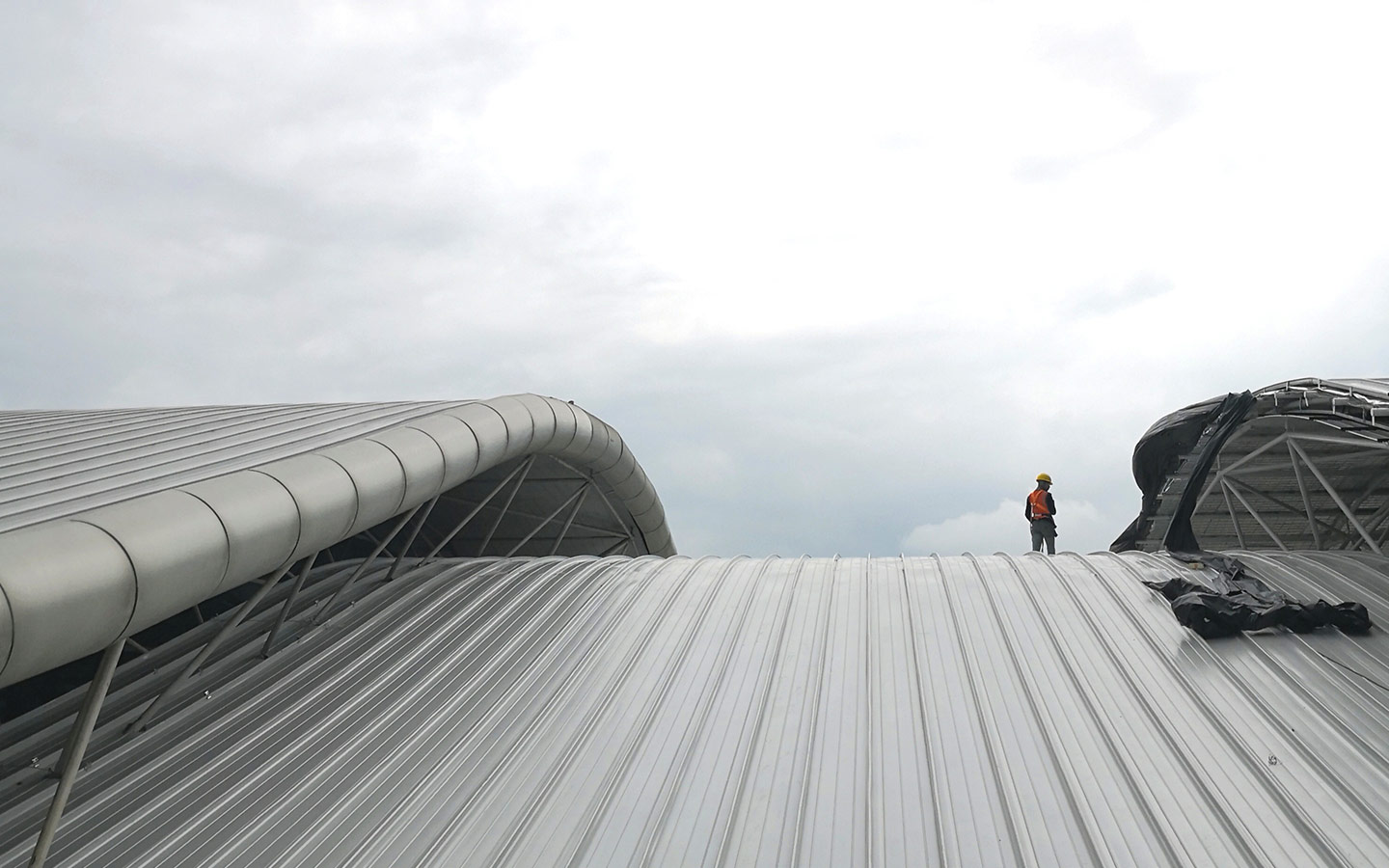
Sultan Thaha Airport demonstrates that a modern terminal can still maintain a strong local character. Identity does not need to emerge through a complete reproduction of traditional forms, but can instead be translated through composition, materials, art, color, and architectural detailing.
For architects, airport design should begin with the user journey and then be translated through circulation, structure, roofing, lighting, the building envelope, and visual identity. When each element develops from the same concept, the terminal can function both as infrastructure and as a representation of the region.
Various other infrastructure project references can also be used to compare how airports, stadiums, terminals, and public facilities develop different approaches to spans and materials.
For projects entering the development stage for roof, wall, color, or environmental specifications, technical requirements can be discussed further through project specification consultation with the COLORBOND® Steel team.
FAQ About Airport Design
What is airport design?
Airport design is the process of designing aviation facilities by integrating passenger circulation, operational functions, wide-span structures, roofing, façades, lighting, materials, and architectural identity.
Why is the roof important in an airport terminal?
The roof covers a large span while also influencing the visual character of the terminal. Its geometry, structure, materials, drainage, and lighting need to be developed in a coordinated manner.
How can local culture be incorporated into a modern airport?
Local culture can be translated through proportions, patterns, artworks, materials, colors, landscaping, or interpretations of traditional forms adapted to contemporary building needs.
Why do terminals require wide-span spaces?
Wide spans provide flexibility in organizing passenger movement, check-in areas, waiting rooms, and various operational functions. Structural elements can also be positioned so that user orientation remains easy to understand.
What makes Sultan Thaha Airport interesting?
Its main character lies in its layered roof composition and the relationship between modern architecture and Jambi’s cultural identity. This approach allows the airport design to serve both a transportation function and a role as the region’s visual gateway.
Article Sources
- Steel Architectural Award
- Reference to the Steel Architectural Award 2024 finalists from the COLORBOND® website
- Related article references from the COLORBOND® Steel website