22 May 2026
FNI Office: Stunning Modern Office Design
FNI Office: Stunning Modern Office Design
Share:


The Office Is No Longer Just a Workplace
In many cities today, offices are no longer designed solely as places to work. They have become a representation of how a company sees itself—and how it wants to be perceived.
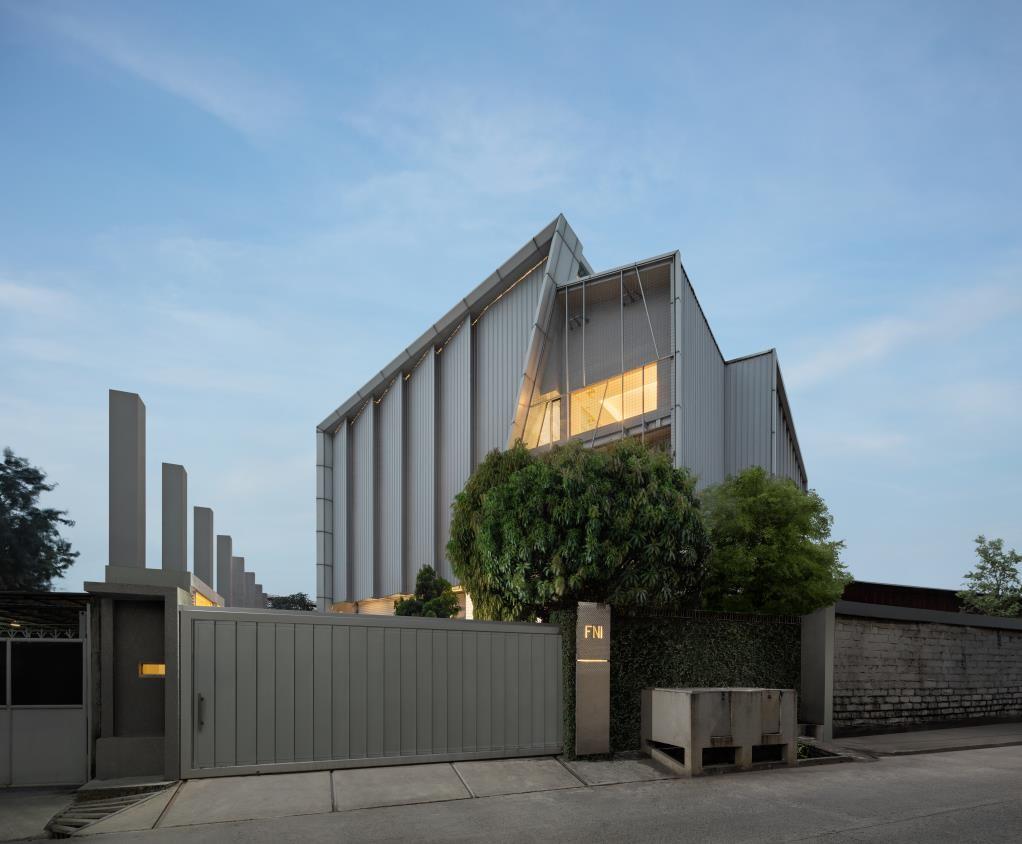
At the FNI Head Office, this approach is evident from the very first glance. The steel roofing material does more than simply cover the building; it is also exposed on the façade, creating an innovative architectural expression.
Its form is bold, neatly arranged, and understated—yet it still delivers a strong identity.
When Industrial Design Becomes an Architectural Language
In the context of modern industrial office design, material honesty is often a key approach. Instead of being concealed, the structure becomes part of the design expression.
At the FNI Head Office, the steel roof is not merely a technical element—it becomes an architectural language:
- bold, defined lines
- repetitive yet precise modules
- a neat composition that remains elegant
- a high span that feels light
This is where architecture begins to communicate—not through ornamentation, but through visible structural logic.
Steel Structure: Precision That Shapes Space
There is a reason why many architects choose steel structures when designing office buildings. It is not only about strength, but also precision.
Flexibility Without Losing Strength
Steel structures allow for wider spans with slimmer elements. Workspaces can be designed to be more open and flexible, with minimal visual obstruction.
Measurable Efficiency
In office projects, construction time and cost efficiency are critical. Steel systems enable faster construction processes with a high level of precision.
Aesthetic Born from the Structure Itself
Unlike conventional approaches, steel structures often do not need to be concealed. Their character defines the design—honest, bold, and modern.
Architectural Design Tools Behind Structural Precision
Beyond materials, planning plays an equally important role. In projects like the FNI Head Office, the precision of steel structures is not accidental—it results from a carefully measured design process from the very beginning.
Architectural design tools help architects and engineers produce more accurate and efficient plans. Today, software such as CAD, BIM (Building Information Modeling), and 3D visualization tools like SketchUp enable a more structured design process.
Through these tools, architects can:
- create highly detailed technical drawings
- simulate structural performance before construction
- visualize the building realistically
Additionally, structural analysis software such as ETABS and SAP2000 ensures that the design remains safe and meets span requirements.
With the help of digital tools, the design process becomes faster, more precise, and easier to communicate among architects, contractors, and clients.
Layers That Complete the Steel Structure System
However, as in many aspects of architecture, structure is only part of the story. The material layers that protect and enclose it are equally important.
This is where materials like COLORBOND® steel become relevant. It is worth noting that COLORBOND® Steel has now reached 60 years as a global coated steel brand from BlueScope—continuing to evolve and innovate to meet the needs of present and future architecture.
COLORBOND® Steel: When Technology Meets Architecture
In modern office projects, materials must be strong while maintaining consistent performance and appearance.
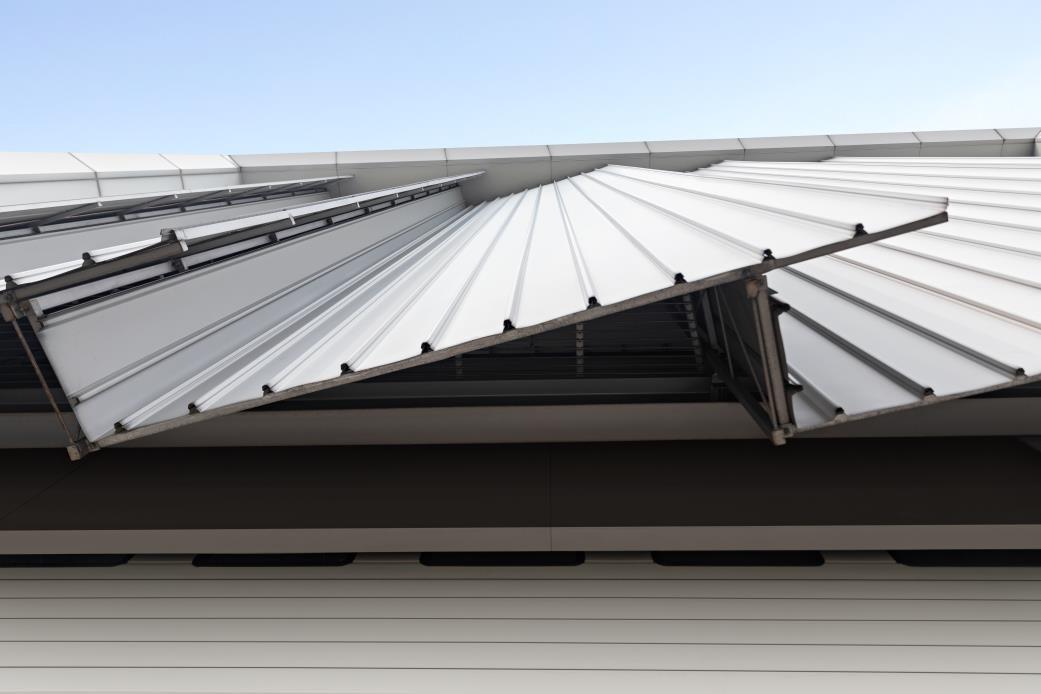
COLORBOND® steel is designed with a multi-layered system that works in harmony.
Technology That Supports Building Performance
Thermatech® Solar Reflectance Technology
Helps reflect solar heat, maintaining indoor thermal comfort.
Aluminium-Zinc Coating (AZ150–AZ200)
Protects the material from corrosion, especially in humid environments.
Super Polyester Paint System
Maintains color stability, ensuring long-lasting visual consistency.
Clean Technology
Keeps the surface cleaner for longer, reducing maintenance without compromising aesthetics.
Material Variants for Different Design Approaches
Every project has a unique context. Therefore, materials must offer flexibility.
COLORBOND® steel comes in several variants:
1. COLORBOND® Steel Ultra
Substrate: ZINCALUME® steel AZ200 (Zn/Al alloy-coated steel)
Designed for:
- high corrosion risk areas
- coastal or industrial environments
Provides enhanced long-term corrosion protection.
2. COLORBOND® Steel XAL
Substrate: Aluminium Alloy 3105 H16
Key characteristics:
- lightweight
- naturally corrosion-resistant
- high formability
Ideal for architectural designs requiring material flexibility.
3. COLORBOND® Steel XPD
Substrate: ZINCALUME® steel AZ150 (Zn/Al alloy-coated steel)
Advantages:
- PVDF coating
- high color stability
- excellent weather resistance
Suitable for buildings with long-term aesthetic demands.
4. COLORBOND® Steel XRW
Substrate: ZINCALUME® steel AZ150 (Zn/Al alloy-coated steel)
Combines:
- Thermatech® Technology
- Clean Technology
- Super Polyester Paint System
Ideal for:
- educational building roofs
- modern architectural panels
5. COLORBOND® Steel Matte Finish
Substrate: ZINCALUME® steel AZ150
Paint system: Super polyester with low gloss (7 G.U)
Advantages:
- reduces glare
- delivers a softer, more elegant appearance
- suitable for modern minimalist design
Durability That Brings Peace of Mind
In office buildings, long-term material performance is a key consideration.
COLORBOND® steel offers:
- up to 35 years corrosion resistance warranty
- up to 12 years color warranty*
*Terms and conditions apply.
More than just numbers, this reflects how materials can perform reliably without constant maintenance.
When Structure and Aesthetics Are No Longer Separate
Ultimately, the FNI Head Office demonstrates a simple yet important idea:
- In modern architecture, structure and aesthetics no longer stand apart.
- They shape one another.
- Steel structures provide precision.
- Materials provide protection.
- Design unites them into a cohesive spatial experience.
Steel Roofing That Works Quietly
Some buildings strive to stand out. Others choose to work quietly.
The FNI Head Office sits somewhere in between. It does not seek attention, yet its presence feels strong. It does not speak loudly, yet every element is thoughtfully designed.
And perhaps that is the true strength of modern industrial office design what appears simple often holds carefully measured complexity within.
FAQ
What is modern industrial office design?
Modern industrial office design is an architectural approach that emphasizes material honesty, such as exposed steel, concrete, and structural elements. It focuses on bold, functional, and efficient aesthetics with minimal ornamentation.
Why are steel structures commonly used in office buildings?
Steel structures are widely used due to their high strength, design flexibility, and ability to support faster, more precise construction. This makes them ideal for modern offices that require open spaces and efficient building processes.
What are the advantages of steel-structured office buildings compared to other materials?
Steel office buildings offer several advantages, including wider spans, lighter structural weight, and greater design flexibility. Additionally, steel supports construction efficiency and long-term durability.
How do steel structures influence office space design?
Steel structures allow office spaces to be more open with fewer columns, creating a flexible and collaborative work environment. They also improve natural lighting and visual comfort.
What is the role of cladding materials like COLORBOND® steel in office buildings?
Cladding materials like COLORBOND® steel protect structures from heat, rain, and corrosion. They also help maintain a modern appearance while reducing long-term maintenance needs.
Do steel office buildings require high maintenance?
No. With modern coating technology, materials like COLORBOND® steel are designed to resist corrosion and color fading, making them more maintenance-efficient compared to conventional materials.
Refrensi