11 May 2026
Peeking Into the Modern and Elegant Design of Quantis Club House
Peeking Into the Modern and Elegant Design of Quantis Club House
Share:


Not every building wants to stand out. Some choose to be felt present without being loud, blending into their surroundings without losing their identity.
Quantis Clubhouse BSD is one of them.
Here, architecture does not speak loudly. It flows through lines, shadows, and materials. And among all these elements, the roof becomes one of the most defining features.
When the Roof Connects Space and Atmosphere
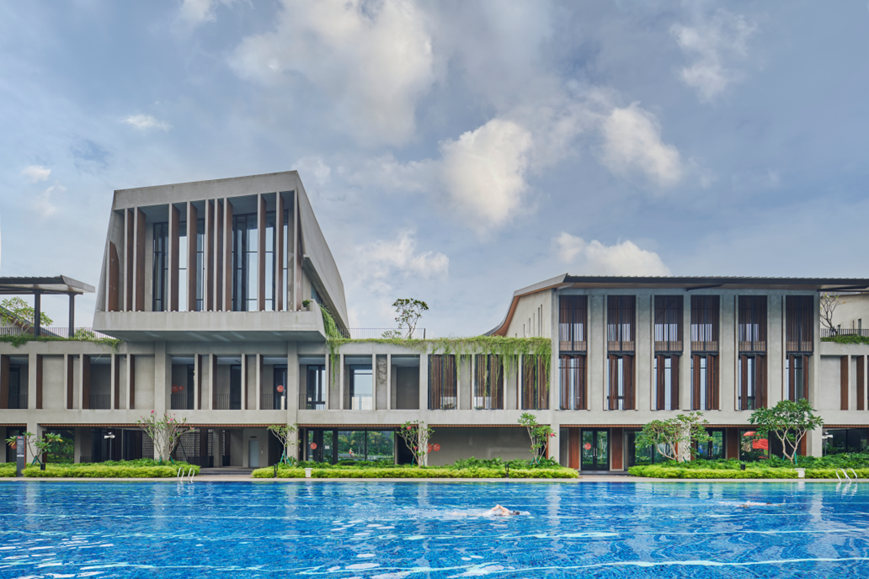
The roof at Quantis Clubhouse is not merely a protective layer.
It acts as a bridge between:
- indoor and outdoor space
- light and shadow
- structure and experience
Its lightweight form, combined with wide spans, creates an open atmosphere while still providing protection. The space feels airy, airflow remains active, and natural light enters in a controlled manner.
At this point, design is no longer just about form it is about how the space is experienced.
Why Steel Roofing Becomes the Preferred Choice
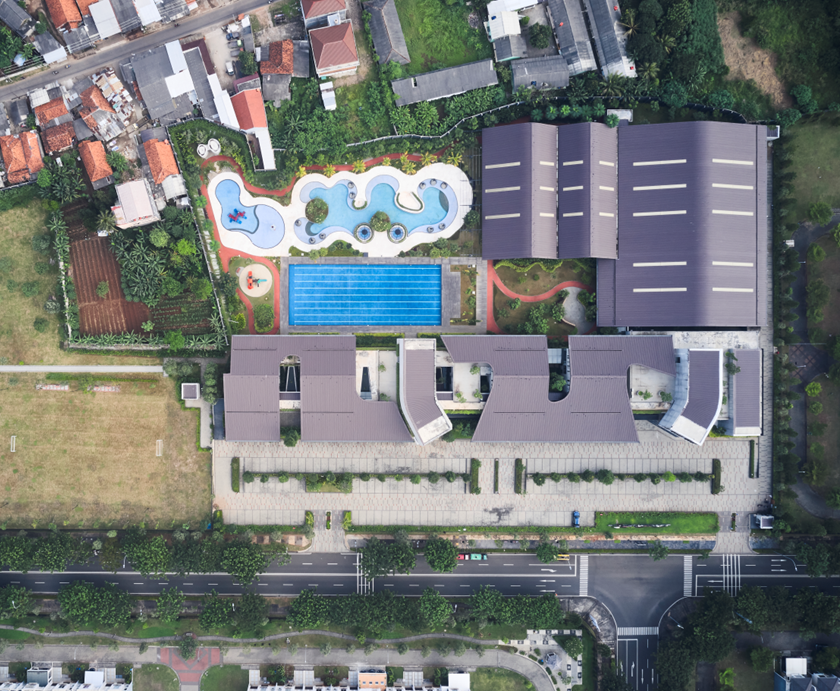
Behind this calm visual presence lies a strong technical decision.
Lightweight Structure, Wide Span
Steel allows roof designs with minimal columns, creating wider and more flexible spaces.
Flexible for Modern Design
Roof forms can follow the architect’s vision — curved, sloped, or geometric.
Resistant to Tropical Climate
Heat, rain, and humidity are no longer major challenges for modern steel materials.
Material That Works Quietly Behind the Scenes
.png)
This year, COLORBOND® Steel celebrates its 60th anniversary — a significant milestone for a material that has continuously evolved over time. Behind this achievement lies BlueScope’s long journey in developing coated steel, adapting it to changing architectural needs without ever standing still.
The progress is evident. Coating technology has become more refined, color durability is more stable against UV exposure, and performance is increasingly prepared to face unpredictable climate conditions.
For professionals in architecture, this provides a sense of confidence. What we design today is not only supported by proven materials but also by materials that continue to evolve and remain relevant for future spatial needs.
Behind the Wide Span, There Is Precise Planning
Beyond material selection, another layer works quietly behind the scenes — the planning process itself.
Today, architecture no longer begins with sketches alone. Tools such as CAD, BIM, and 3D visualization help transform ideas into something that can be tested, calculated, and visualized with precision.
Through BIM, various building elements can be understood as an integrated system. SketchUp and other visualization tools allow exploration of form, balancing function and spatial experience. Structural simulations ensure that every design decision remains logical and buildable.
With digital tools, the design process becomes more directed — not only faster, but also more accurate.
What appears calm and simple in the final form is actually the result of a highly measured and detailed process.
Technology That Works Silently
Comfort in a building is not only created by design, but also by technology working behind the scenes.
Thermatech® Technology
Reduces heat absorbed by the roof by reflecting solar radiation, keeping the space below cooler.
Super Polyester Paint System
Maintains color stability and protects against long-term UV exposure.
Clean Technology (Important Addition)
In tropical climates, dirt and pollution often become major challenges.
With Clean Technology:
- dirt does not easily stick
- surfaces stay cleaner longer
- maintenance becomes minimal
Rainwater even helps clean the surface naturally.
Product Options for Modern Architectural Design
To support various architectural needs, selecting the right material type becomes part of the design strategy.
1. COLORBOND® Steel Ultra
Substrate: ZINCALUME® steel AZ200 (Zn/Al Alloy-Coated Steel)
Designed for:
- high corrosion risk areas
- coastal or industrial environments
Provides extra long-term corrosion protection.
2. COLORBOND® Steel XAL
Substrate: Aluminium Alloy 3105 H16
Key characteristics:
- lightweight
- naturally corrosion-resistant
- high formability
Ideal for architectural designs requiring material flexibility.
3. COLORBOND® Steel XPD
Substrate: ZINCALUME® steel AZ150 (Zn/Al Alloy-Coated Steel)
Advantages:
- PVDF coating
- high color stability
- excellent weather resistance
Suitable for buildings with long-term aesthetic demands.
4. COLORBOND® Steel XRW
Substrate: ZINCALUME® steel AZ150 (Zn/Al Alloy-Coated Steel)
Combines:
- Thermatech® Technology
- Clean Technology
- Super Polyester Paint System
Ideal for:
- modern clubhouse roofing
- architectural panels
5. COLORBOND® Steel Matte Finish
Substrate: ZINCALUME® steel AZ150
Paint system: Super polyester with low gloss (7 G.U)
Advantages:
- reduced glare
- smoother and more elegant appearance
- suitable for modern minimalist design
More Than Appearance, It Is About Durability
Architectural beauty is not only about the beginning, but about how it endures over time.
COLORBOND® Steel offers:
- corrosion resistance warranty up to 35 years
- color durability warranty up to 12 years*
*Terms and conditions apply.
When Architecture Becomes an Experience
Quantis Clubhouse does not try to capture attention. It chooses to be experienced.
Through:
- lightweight structure
- durable materials
- and technology working quietly in the background
Steel roofing here is not merely a covering. It becomes part of the spatial experience itself. And perhaps, that is where its beauty lies, when something complex feels effortlessly simple.
FAQ (People Also Ask)
What are the advantages of steel roofing for modern clubhouses?
Steel roofing allows wide spans without columns, flexible design, and strong resistance to tropical climate.
Does steel roofing make buildings hotter?
No. With Thermatech® technology, heat is reflected and indoor spaces remain cooler.
What is the function of Clean Technology?
It prevents dirt from sticking and keeps surfaces cleaner with minimal maintenance.
How long does COLORBOND® Steel last?
Corrosion resistance up to 35 years and color durability up to 12 years (terms and conditions apply).
Refrence :
https://steelarchitecturalaward.com/en/project-honorees/award-2024/