11 Sep 2026
PLTU Merak: When Sustainable Design Meets Energy Infrastructure
PLTU Merak: When Sustainable Design Meets Energy Infrastructure
Share:


Sustainable architecture in industrial facilities is not determined solely by the operational technology inside the building. Architects also need to consider how the roof, façade, orientation, ventilation, material selection, and thermal load management can be designed as an interconnected system.
This approach can be observed at PLTU Merak in Banten. The building uses COLORBOND® Steel for its roofing and incorporates Thermatech® Solar Reflectance Technology as part of the building envelope system. The project also implements a flue gas management system within the facility.
For architects, this power plant example provides a perspective that industrial buildings do not need to be understood merely as containers for production processes. The strategy of industrial architecture in modern production facilities demonstrates how materials, ventilation, temperature control, and environmental conditions can become considerations from the early design stage.
Why Is Sustainable Architecture Relevant to Industrial Buildings?
Industrial facilities have different characteristics from commercial or residential buildings. Building scale, operational activities, envelope area, and environmental conditions mean that architectural decisions can have a significant impact.
The Building Envelope Is More Than Just an Outer Layer
In large-scale facilities such as PLTU Merak, the roof covers a significant area. This means that decisions regarding materials, colors, roof pitch, ventilation, insulation, and surface reflectance need to be developed in a coordinated manner.
In sustainable architecture, the building envelope acts as a mediator between external conditions and indoor requirements. The more effectively the envelope strategy is planned, the more structured the management of thermal loads, humidity, lighting, and building maintenance can become.
This principle is aligned with the discussion of green architecture principles, where environmental response, resource use, and material selection are considered important design decisions from the outset.
The Roof as an Important Part of PLTU Merak’s Thermal Strategy
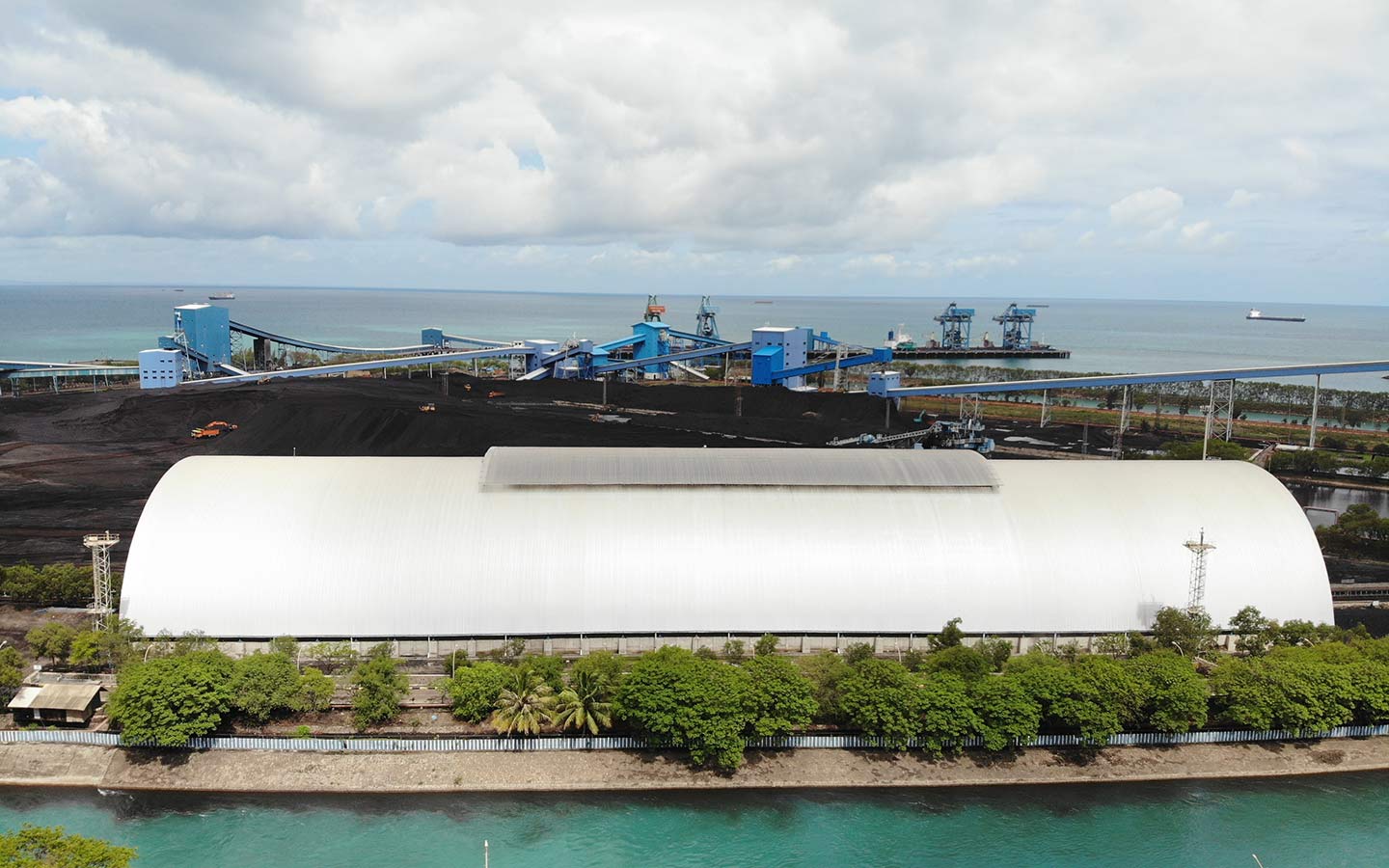
In industrial buildings, the roof is one of the surfaces exposed to solar energy on a large scale. Therefore, its specification needs to be considered beyond its basic function as a building covering.
Solar Reflectance Helps Manage Heat
The roof of PLTU Merak uses COLORBOND® Steel equipped with Thermatech® Solar Reflectance Technology. This technology is designed to increase solar reflectance, helping to reflect a portion of the solar energy that reaches the roof surface.
In the context of sustainable architecture, this approach can become one part of the building’s thermal management strategy. However, material technology still needs to work together with other elements such as insulation, natural and mechanical ventilation, spatial volume, building orientation, and the characteristics of the processes taking place inside.
For architects, this is important because thermal comfort or temperature stability does not depend on a single component. A building needs to be understood as a system in which every element influences the others.
Materials as Part of Long-Term Planning
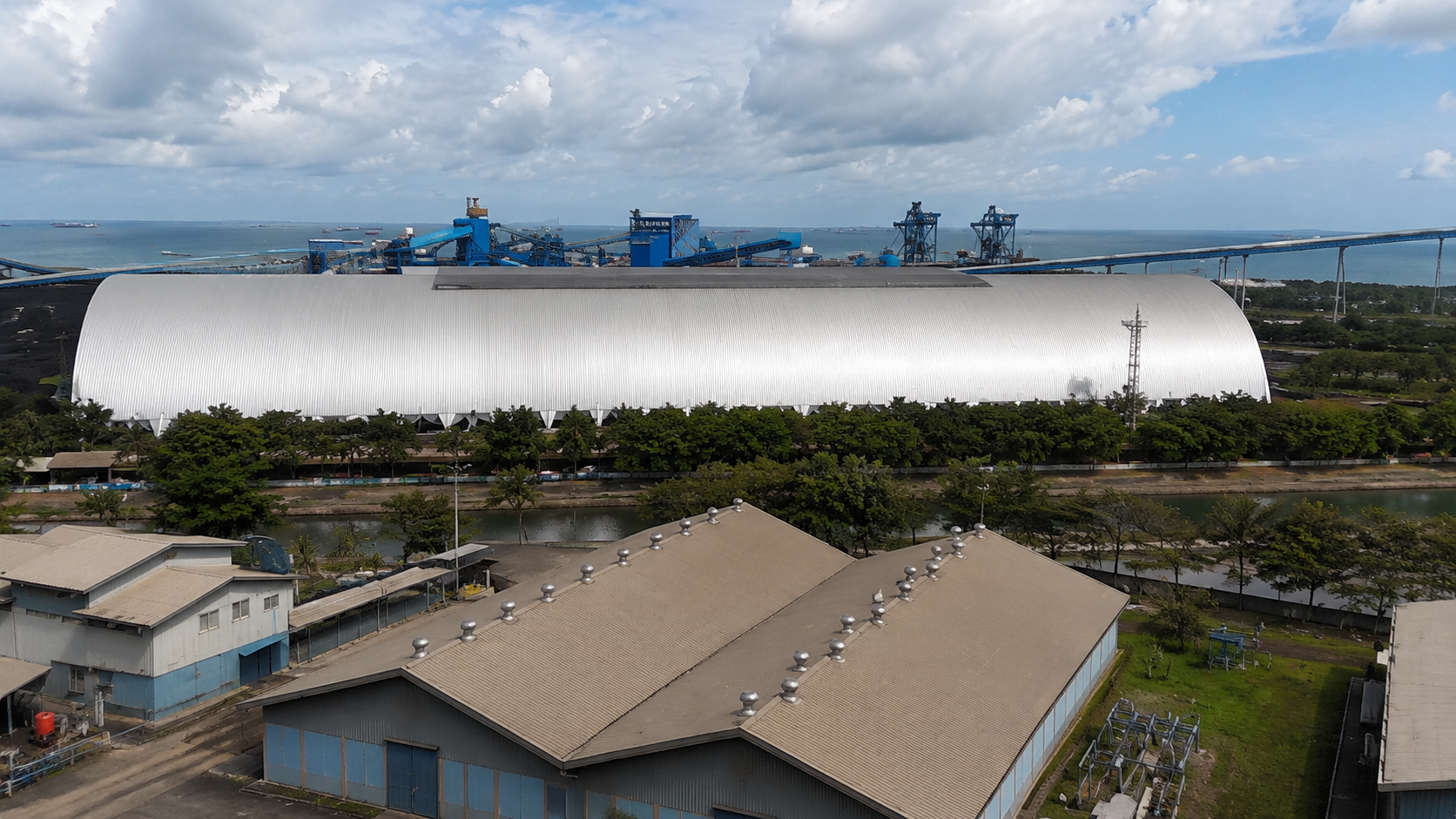
Material selection for industrial facilities needs to consider the site context and level of environmental exposure. Industrial environments may involve humidity, pollution, particles, and atmospheric conditions that differ from those experienced by typical buildings.
In this context, COLORBOND® Steel can be understood as a pre-painted steel material from BlueScope used for roofing and wall applications. Its material system is developed with several technologies, including Thermatech®, a super polyester paint system, and Clean Technology, which is designed to support surface protection under tropical environmental conditions.
For industrial projects, material specifications are also differentiated according to the level of environmental exposure. References to materials for industrial buildings show that heavy industry, general industry, and light industry may require different product approaches depending on site conditions.
This way of thinking is closely related to sustainable architecture. Materials are not selected solely for their visual expression, but also for their suitability for environmental conditions, operational requirements, maintenance strategies, and the overall building system.
One example is PLTU Indramayu, which uses COLORBOND® Sonata Blue on the building walls. The color selection does not only consider aesthetic aspects but is also intended to harmonize with the surrounding environment, particularly the coastal landscape around the power plant.
Although its function differs significantly from PLTU Merak, the project demonstrates the same principle: materials and building forms need to work according to spatial requirements. For architects, examining different building typologies can broaden the understanding of how sustainable architecture is translated according to the context of each project.
COLORBOND® Steel Material Specifications for Energy Facilities in Extreme Coastal Environments
For energy facilities located in coastal areas such as PLTU Merak, building envelope material selection needs to take environmental corrosivity into account from the early design stage. Exposure to salt aerosols, high humidity, prevailing wind direction, building distance from the coastline, and the potential accumulation of deposits on surfaces can all influence roofing and wall specification requirements.
For the Energy & Mining category in extreme coastal conditions, COLORBOND® XAL and COLORBOND® Ultra are two variants that can be considered. Each has different material characteristics, so selection needs to be adapted to the level of environmental exposure, construction requirements, profile systems, and building design. Within the Energy & Mining category, both variants are positioned as options for environments with significant corrosion risks.
1. COLORBOND® XAL
Uses an Aluminium Alloy 3105 H16 substrate. Its key characteristics include:
- Relatively lightweight material
- Natural corrosion resistance
- High formability
- Flexible for roofing and wall applications with certain geometries
- Suitable for architectural requirements involving panel forming
2. COLORBOND® Ultra
Uses a ZINCALUME® steel AZ200 substrate, which is an aluminium-zinc coated steel with a higher coating mass than the AZ150 variant. Its key characteristics include:
- Designed for environments with a high risk of corrosion
- Relevant for coastal areas
- Can be considered for industrial areas with more aggressive environmental exposure
- Suitable for projects that require greater attention to long-term material durability
From a sustainable architecture perspective, these considerations show that building envelope performance is not determined solely by form and thermal response. Material resistance to environmental conditions, the material’s ability to meet design requirements, construction details, and long-term maintenance strategies also need to be coordinated from the specification stage.
What Can Architects Learn from PLTU Merak?
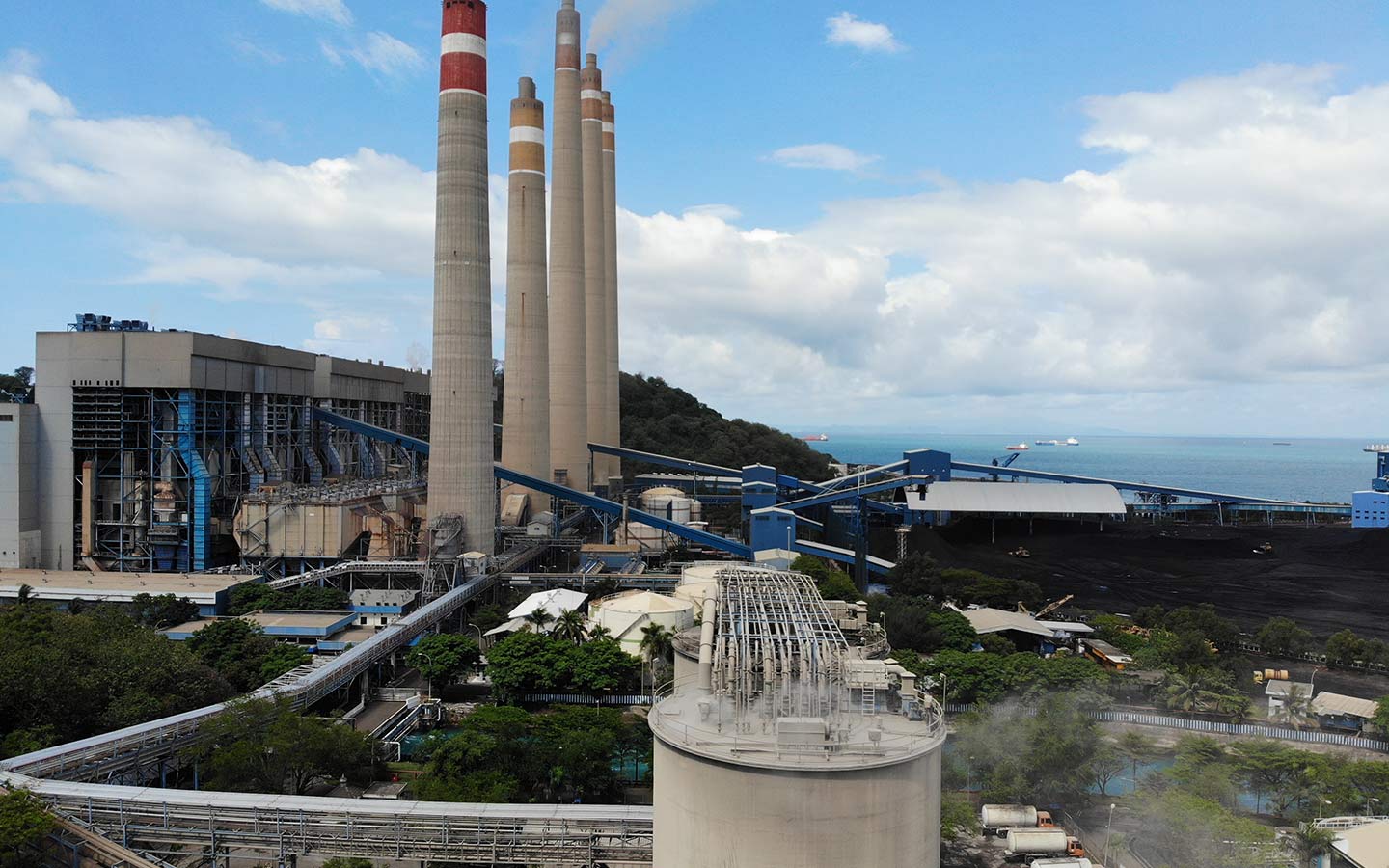
PLTU Merak demonstrates that discussions around sustainability in industrial buildings can begin with very concrete architectural elements: roofs, materials, responses to solar energy, colors, and building envelope coordination.
The main value of this project for architects does not lie in one particular technology. More importantly, it demonstrates how each decision can be positioned within a broader design system.
Through this approach, sustainable architecture in a power plant project can be translated into a design that responds to site conditions, operational requirements, envelope performance, and material planning. This perspective allows industrial buildings to be understood as architectural works that require the same level of design precision as other building typologies.
For industrial projects requiring further discussion regarding roofing materials, façades, colors, or environmental conditions, technical information can be obtained through project specification consultation with the COLORBOND® Steel team.
FAQ About Sustainable Architecture in Industrial Buildings
What is sustainable architecture in industrial buildings?
Sustainable architecture in industrial buildings is an approach that considers resource efficiency, environmental conditions, building envelope performance, operational requirements, material selection, and long-term building use.
Why is roof design important in industrial facilities?
The roof covers a large area and is directly exposed to environmental conditions. Its form, pitch, materials, color, ventilation, insulation, and drainage system need to be designed as one integrated system.
What is the function of Thermatech® technology in roofing materials?
Thermatech® Solar Reflectance Technology helps improve the surface’s ability to reflect a portion of solar energy. Its application still needs to be coordinated with insulation, ventilation, and other thermal strategies within the building.
How do materials support sustainability principles?
Materials that are appropriate for the environmental characteristics and building requirements can help architects plan construction and maintenance systems more effectively. Therefore, site conditions need to be considered as part of the specification process.
Does color influence sustainable architecture?
Yes. In addition to shaping visual identity, surface colors have different solar reflectance characteristics. Therefore, color can be evaluated together with orientation, surface area, materials, and the building’s thermal strategy.
Reference Sources
- Related article references from the COLORBOND® Steel website