14 Jul 2026
SOR Universitas Indonesia and the Architecture of Flexible Long-Span Spaces
SOR Universitas Indonesia and the Architecture of Flexible Long-Span Spaces
Share:


In 2019, Universitas Indonesia began the construction of Sports Complex (SOR) Zone 1 as part of the revitalization of the university's sports precinct. The project was developed to provide an international-standard sports facility for the university community while supporting a wider range of integrated non-academic activities. (Source: Antara News)
The design of modern sports facilities is no longer defined solely by seating capacity or floor area. Instead, it increasingly emphasizes a building's ability to accommodate multiple functions and adapt to different types of activities.
Universitas Indonesia's SOR serves as an example of how long-span spaces can support functional flexibility while shaping the architectural identity of a building.
A similar design approach can also be seen in various contemporary sports facilities that optimize multifunctional spaces to accommodate diverse user needs, such as GOR Djarum Magelang.
Optimizing Building Design Through Long-Span Structures
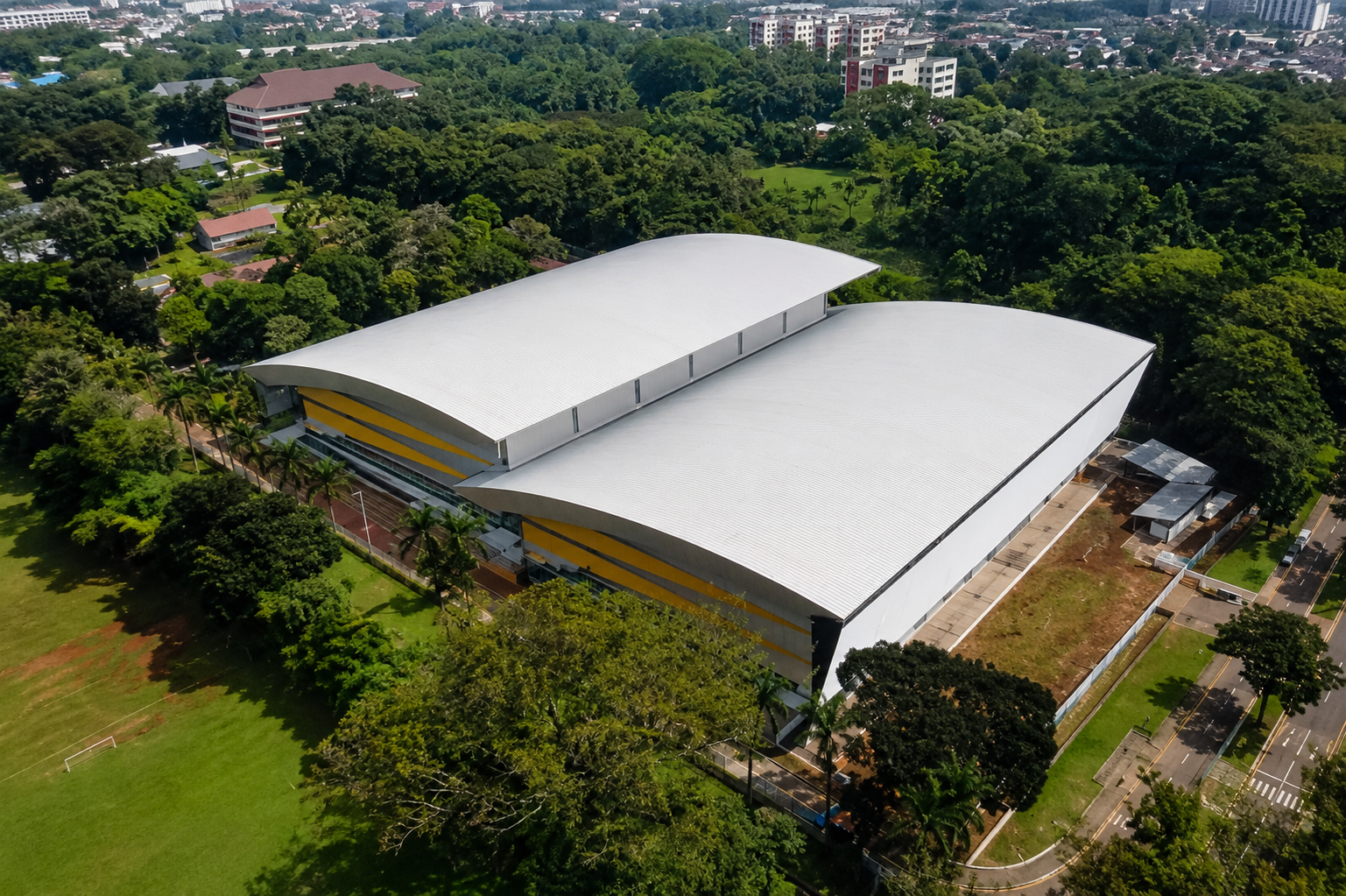
In sports facilities, long-span structures allow the main hall to be used for training sessions, competitions, and a variety of other events with layouts that can be reconfigured more efficiently.
For architects, this design decision extends beyond structural engineering. It also influences circulation patterns, sightlines, and the overall user experience within the building.
Structure as the Foundation of Spatial Flexibility
The structural system must distribute loads efficiently while preserving the quality of the interior space. This approach has become increasingly common in modern sports arenas, where structural efficiency is integrated with sustainability principles, as discussed in...
Building Design That Enhances User Comfort
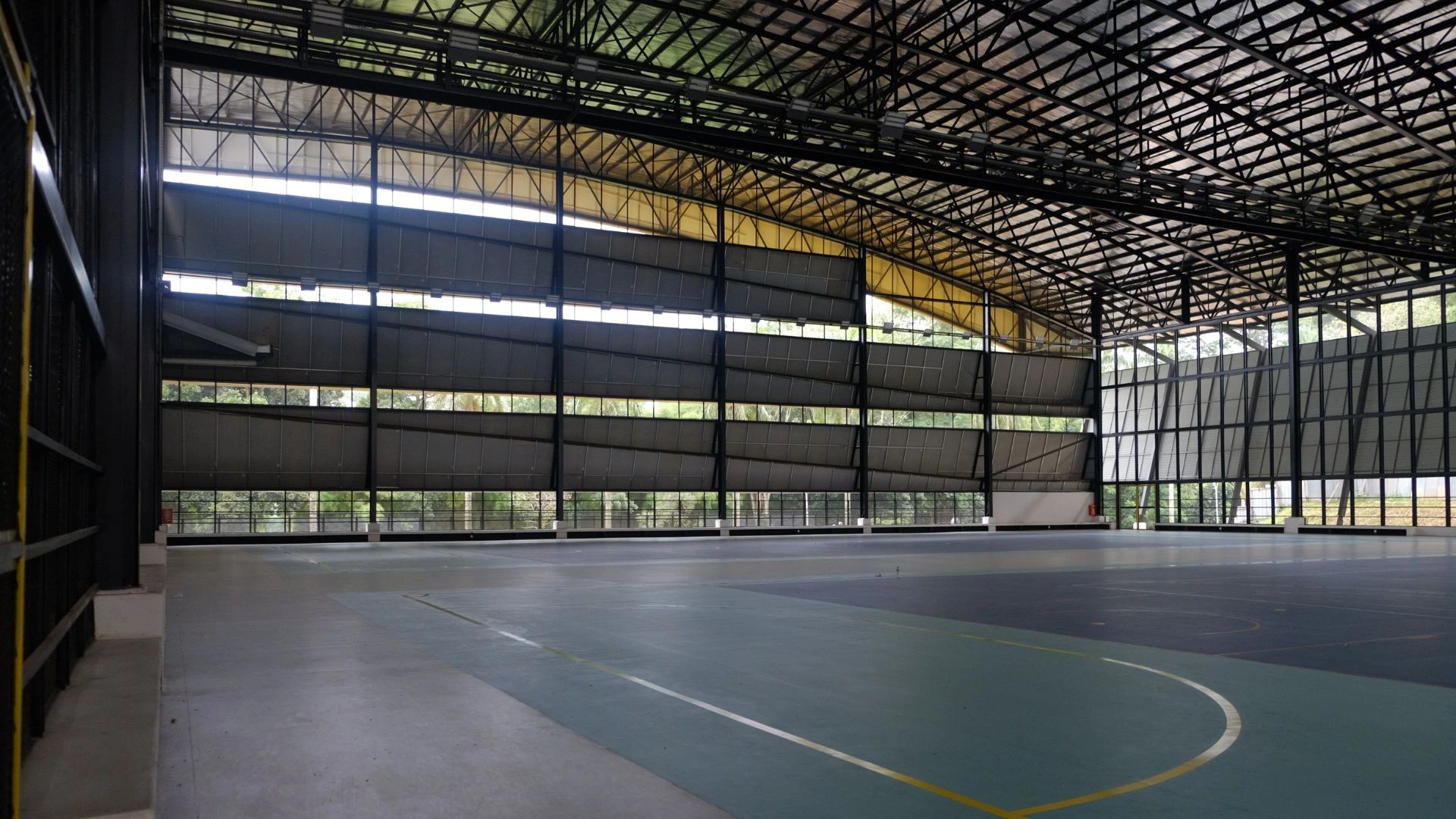
Beyond structural performance, the quality of a sports facility is also shaped by its ventilation, natural lighting, and acoustic performance. These factors should be considered from the earliest stages of design to ensure the building effectively supports athletic activities while providing a comfortable environment for users.
This design philosophy is widely adopted in infrastructure projects that seek to balance functionality, building performance, and architectural expression.
Looking for inspiration from the finalists and winners of the Steel Architectural Award 2024? Explore the COLORBOND® collection of featured projects showcasing innovative architectural solutions, including:
- Jakarta International Stadium
- Loyola Student Center
- Quantis Club House
Material Selection as Part of the Design Strategy
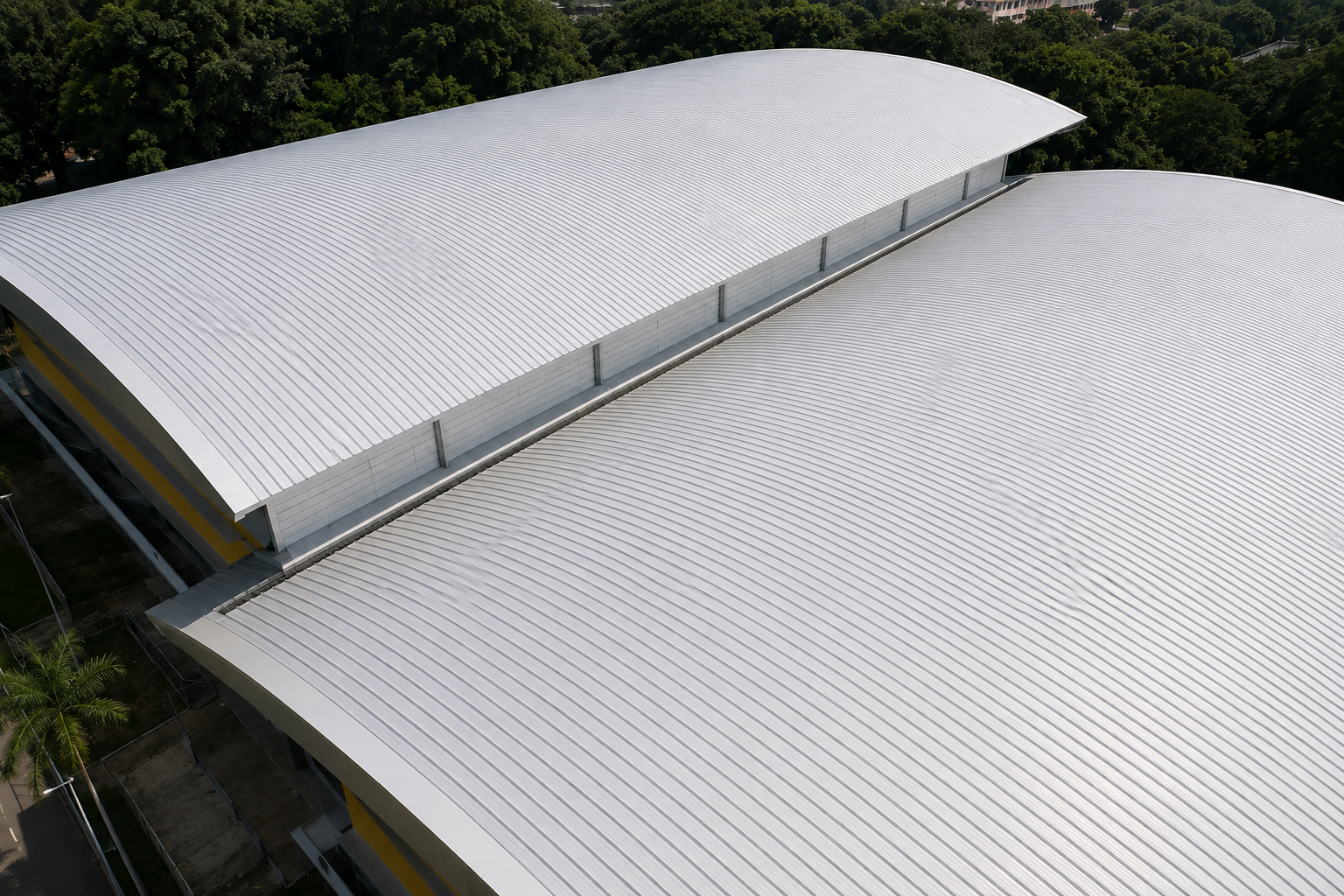
In long-span building design, materials are selected not only for their structural strength but also for ease of construction, structural efficiency, and compatibility with the building's architectural character.
Material solutions for infrastructure projects are therefore an important consideration in supporting the requirements of large-scale public developments.
In addition, the choice of material colors contributes to strengthening the building's visual identity. A broad range of color options allows architects to maintain harmony between the design concept, façade composition, and roofing elements.
Material Solutions for Long-Span Building Design
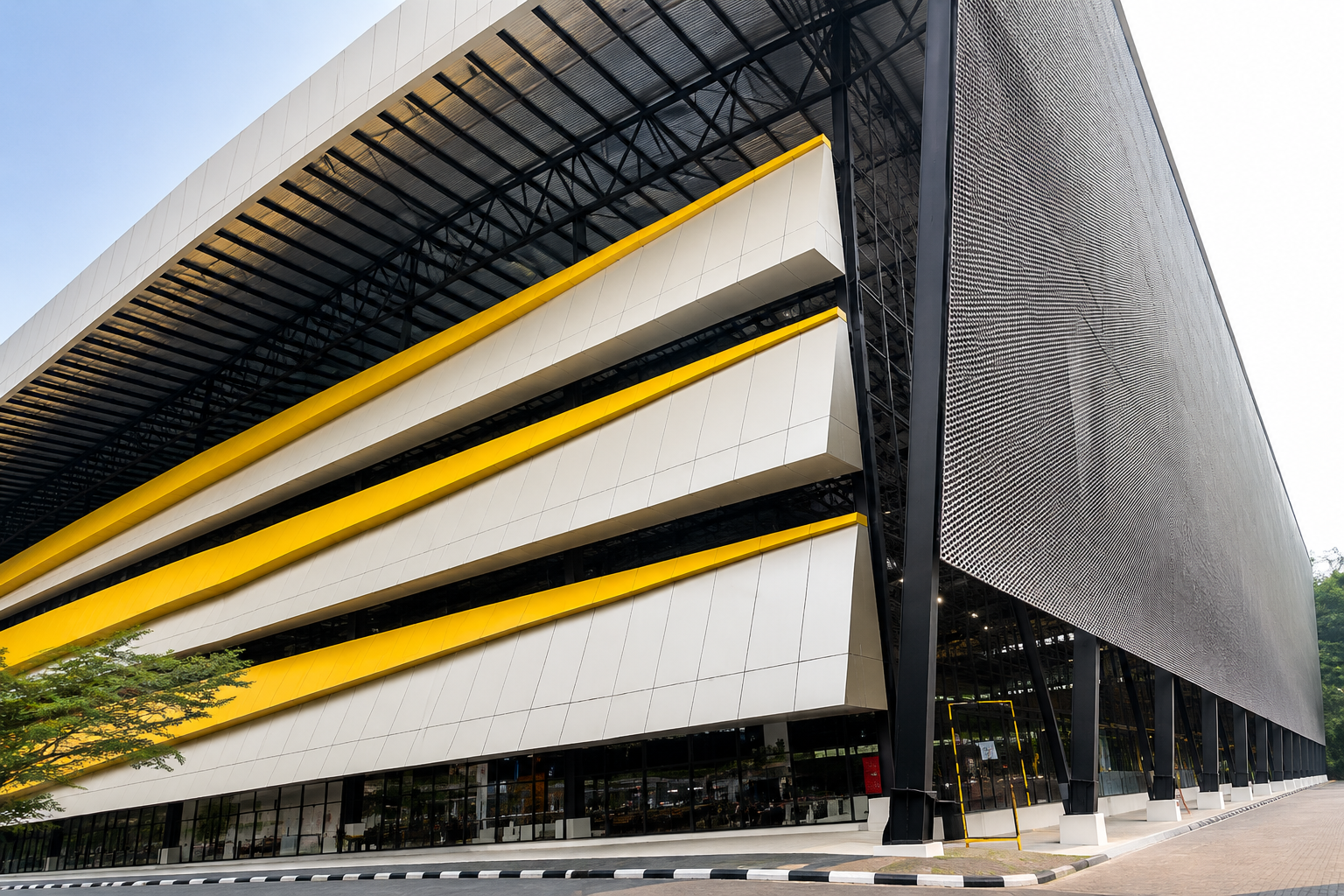
Universitas Indonesia's Sports Complex demonstrates how contemporary sports architecture combines long-span spaces, functional flexibility, and structural efficiency to accommodate a wide range of activities within a single facility.
To ensure these design concepts perform effectively over the long term, building materials should also be evaluated based on durability, performance, and ease of maintenance.
For sports centers, convention halls, and other long-span buildings, roofing and façade materials such as COLORBOND® Steel featuring THERMATECH® technology provide a suitable solution. The material is engineered for long-term durability, helps reduce heat absorption within the building, and delivers a clean, contemporary architectural appearance.
These characteristics make it particularly well suited to buildings with expansive spaces and intensive daily use, such as Universitas Indonesia's Sports Complex.
Every project has unique material requirements. To receive recommendations tailored to your building specifications, consult our team today. We are ready to provide technical guidance and recommend material solutions that best meet your project's needs.
FAQ
Why are long-span structures important in sports facility design?
Long-span structures create more flexible interior spaces, allowing different activities to take place efficiently with adaptable space configurations.
What factors should architects consider when designing sports facilities?
Key considerations include structural systems, ventilation, lighting, acoustics, material selection, and the relationship between functionality and architectural identity.
How do building materials influence architectural design?
Building materials affect structural performance, construction efficiency, visual appearance, and the overall coherence of the architectural concept.
Article Sources
- Steel Architectural Award 2024
- Featured finalists and winners from the COLORBOND® Steel website
- Jakarta International Stadium
- Loyola Student Center
- Quantis Club House
- Related articles from the COLORBOND® Steel website
- GOR Djarum Magelang
- Indonesia Arena
- Antara News