21 Sep 2026
Manggarai Station Design: Wave-Shaped Roof as a Transit Identity
Manggarai Station Design: Wave-Shaped Roof as a Transit Identity
Share:


Manggarai Station design demonstrates how a roof can play a role beyond simply providing shelter for a transit area. At one of Indonesia’s busiest railway stations, the wave-shaped roof creates a recognizable visual character while introducing rhythm across the building mass. COLORBOND® in Gull Grey plays an important role in shaping this architectural composition.
In transportation architecture, identity often emerges from elements that users can immediately recognize. A similar approach can be seen at the BSD Intermodal Public Transport Terminal, where the roof form contributes to the image of an intermodal transit hub. At Manggarai, the roof gesture becomes a defining feature that distinguishes the station within Jakarta’s dense urban environment.
The Roof as the Main Element of Manggarai Station Design
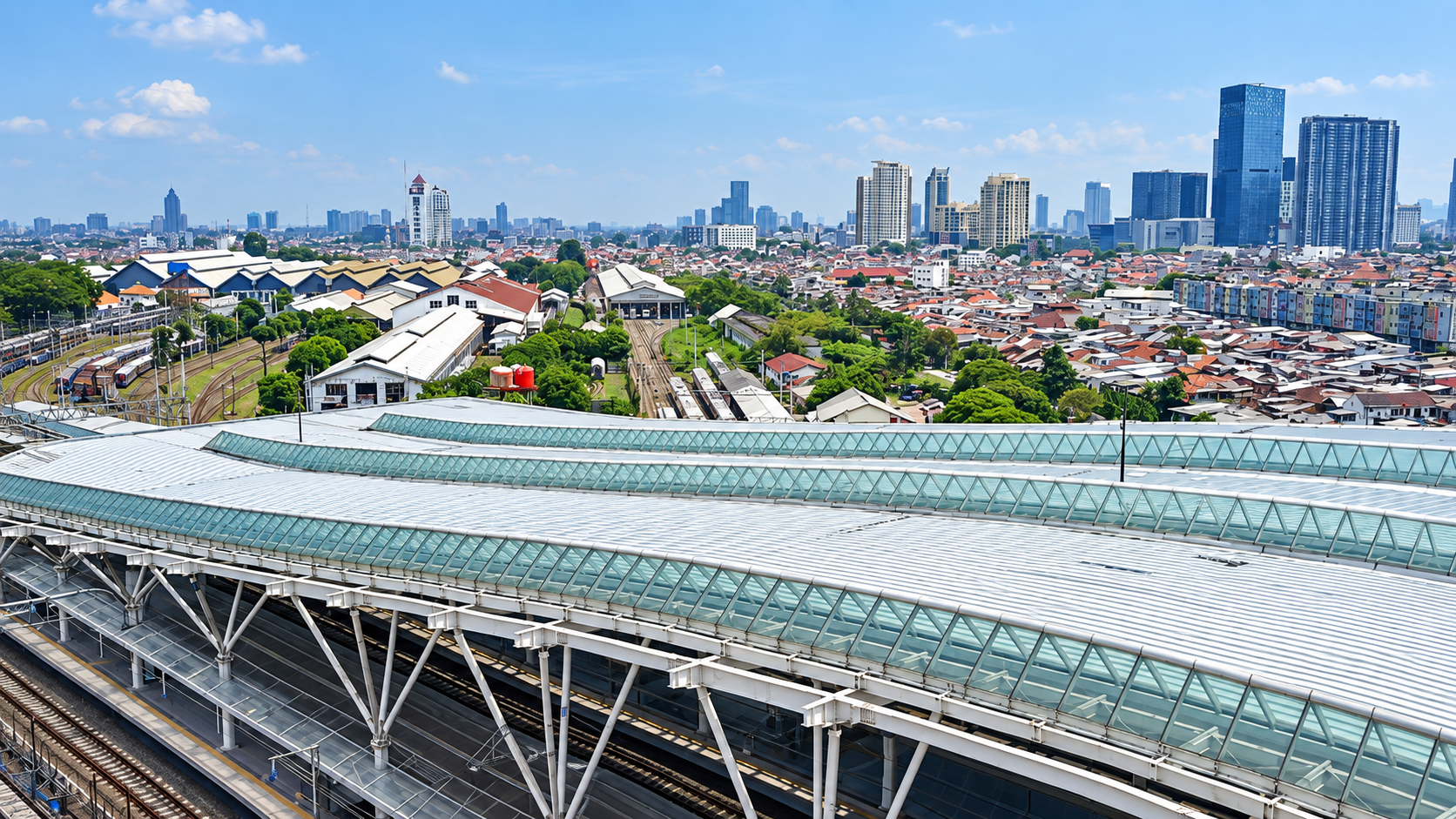
The roof is one of the most expressive elements in the station’s overall architectural composition.
Manggarai Station features a roof form that resembles ocean waves. Its rising and falling rhythm creates a dynamic impression while visually breaking down the long mass of the station.
From an architectural perspective, the strength of Manggarai Station design lies in the consistency of this gesture. Rather than appearing as a separate element placed above the building, the roof becomes the main line that defines its silhouette.
For transportation facilities with high passenger flows, a distinctive architectural form can also help establish a strong visual identity. Users can recognize the station not only through signage but also through the character of its architecture.
COLORBOND® in Gull Grey is used across the roof surfaces of Manggarai Station. The grey tone allows the wave-shaped geometry to remain the primary visual focus while creating a relatively calm relationship with the surrounding environment.
Within Manggarai Station design, colour works together with geometry. Large roof surfaces require a colour that can maintain visual continuity when viewed from different directions and distances.
The Roof and Spatial Experience in Transportation Architecture
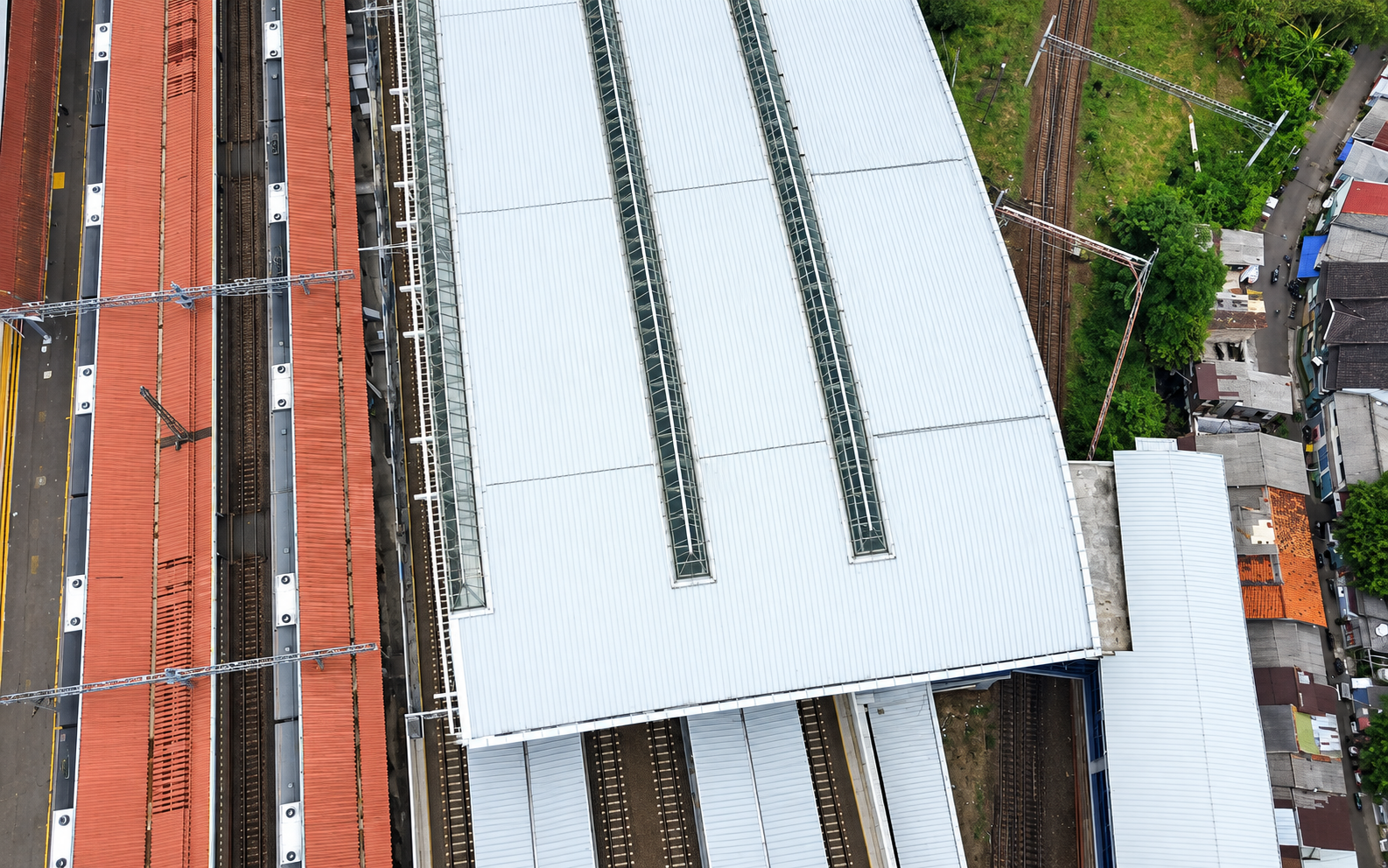
In a railway station, the scale of the roof has a direct relationship with the passenger experience when arriving, waiting, and moving between different areas.
The repetition of curves prevents the overhead surface from appearing as one large, static plane. From an architectural standpoint, this rhythm can help a large-scale transit building feel visually lighter despite its substantial dimensions.
This is one of the key lessons from Manggarai Station design. Roof geometry can be used to establish architectural identity while reducing the sense of monotony often associated with buildings driven by highly technical functions.
A different approach can be seen at Sultan Thaha Airport in Jambi, which also uses layered curved roof surfaces as part of the terminal’s architectural expression. Both projects demonstrate how the geometry of a building’s upper section can become an important tool for shaping the identity of transportation facilities.
COLORBOND® in Manggarai Station Design
Material selection needs to be considered alongside the roof form, colour, and the scale of the surface being covered.
At Manggarai Station, COLORBOND® is used as the primary material across the wave-shaped roof surfaces. Project references also specifically note the use of Gull Grey.
In developing Manggarai Station design, the relationship between the panels, supporting structure, curves, edges, and connection details becomes important in ensuring that the main silhouette remains visually consistent.
COLORBOND® steel is a coated metal material from BlueScope used for various roofing and walling applications. For transportation projects, architects can explore products for infrastructure buildings alongside the available standard colour range when developing alternatives for the building envelope.
The Station as Part of Urban Infrastructure Architecture
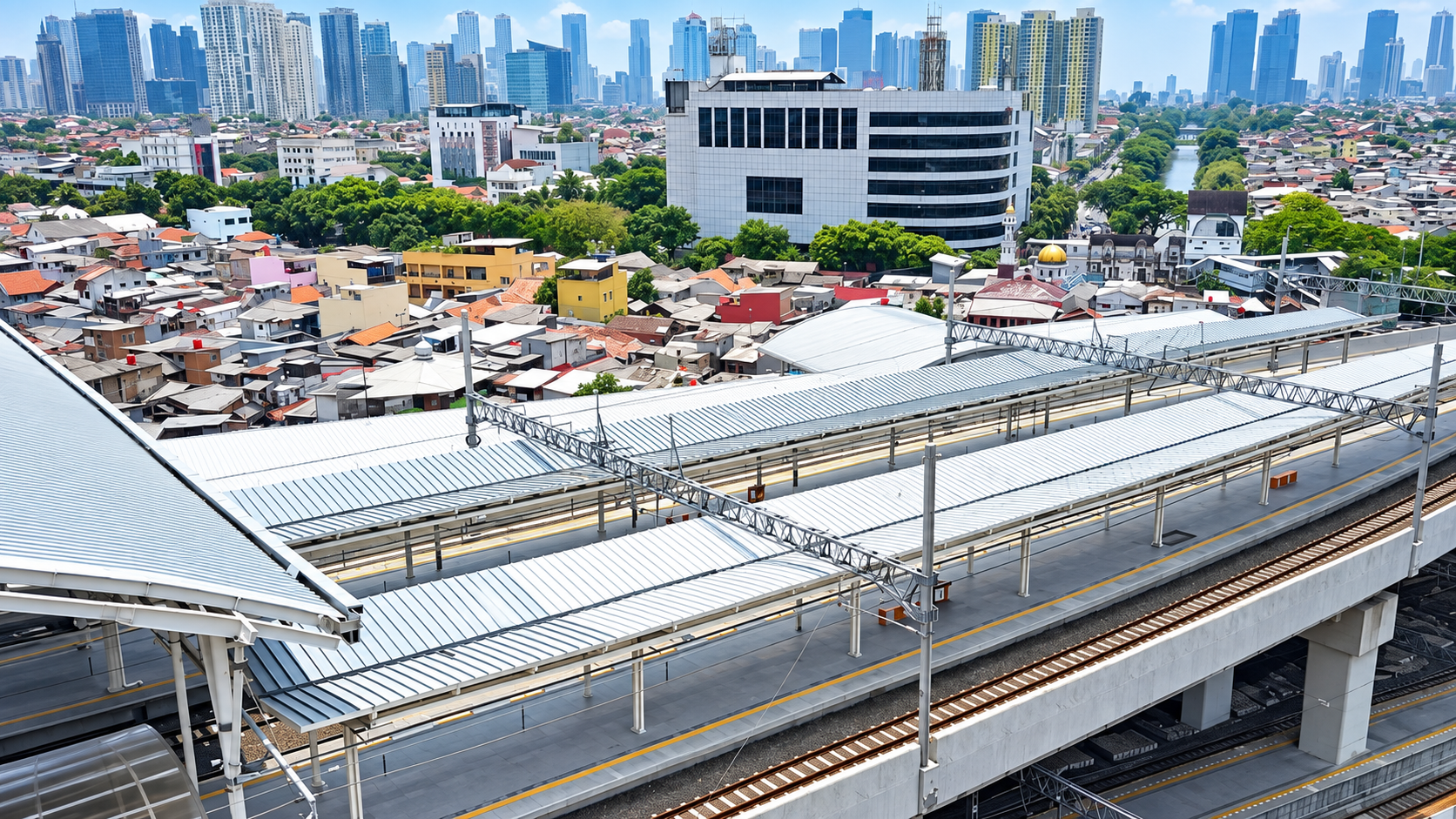
Transit buildings do more than address the practical needs of passenger movement. They also contribute to the architectural identity of a city.
The application of roofing material at Kuningan LRT Station provides an interesting comparison. COLORBOND® is also used as part of the station’s architectural expression, demonstrating how roofing materials can contribute to the identity of transportation facilities through different design languages.
Various infrastructure project references show that roof forms need to respond to scale, function, site conditions, and the user experience. There is no single geometry that applies universally to every project.
Manggarai Station design demonstrates how the identity of a transportation building can be shaped through one consistently developed architectural element.
The wave-shaped roof establishes the silhouette, Gull Grey unifies the surface, while the metal material reinforces the continuity of the overall form. For architects, the project offers a useful lesson: station architecture does not necessarily require numerous visual gestures. One strong design decision applied to the roof can be enough to give the entire building a distinctive character.
For further development of roofing systems, colour options, and technical requirements for infrastructure projects, project details can be discussed through a technical consultation with the COLORBOND® steel team.
FAQ
What is the main characteristic of Manggarai Station design?
Its most distinctive feature is the wave-shaped roof, which creates a dynamic and easily recognizable silhouette.
What material is used for the roof of Manggarai Station?
Project sources note the use of COLORBOND® as the primary material for the roof surfaces.
Which COLORBOND® colour is used?
The roof uses Gull Grey, creating a neutral grey appearance across the overall roof surface.
Why is the roof form important in station design?
The roof occupies a significant visual scale, allowing it to shape the building’s identity, establish rhythm across its mass, and influence how the station is recognized within its surroundings.
What can architects learn from this project?
Manggarai Station design highlights the importance of developing form, material, and colour as a unified composition, particularly for transportation facilities with large-scale spaces and high levels of user activity.
References:
- Related COLORBOND® steel articles