23 Nov 2026
Art Deco: 6 Architectural Features and Examples in Indonesia
Art Deco: 6 Architectural Features and Examples in Indonesia
Share:


Art Deco is a design style that emerged in the early 20th century, characterised by bold geometric forms, decorative ornamentation, and materials that convey elegance. Its influence extends beyond interior design to building facades, hotels, residential properties, and public facilities.
Unlike modern architecture, which generally prioritises simplicity of form, Art Deco architecture combines functionality with visual expression through geometric patterns, vertical lines, and decorative details.
In Indonesia, this architectural style became particularly prominent in historic buildings in Bandung. What are the defining characteristics of Art Deco architecture, and how can its design principles be applied to contemporary buildings?
What Is Art Deco Architecture?
Art Deco architecture is an architectural style that developed during the 1920s and 1930s, with a distinctive visual character influenced by modernisation, industrial development, and decorative arts.
The term Art Deco is associated with the Exposition Internationale des Arts Décoratifs et Industriels Modernes, held in Paris in 1925.
This style combines geometric compositions, stepped forms, vertical lines, stylised ornamentation, and materials with strong visual characteristics.
As the movement evolved, Streamline Moderne emerged as a related architectural approach, emphasising horizontal lines, rounded corners, and forms inspired by modern transportation design.
6 Key Characteristics of Art Deco Architecture
1. Flat Roofs with Parapets
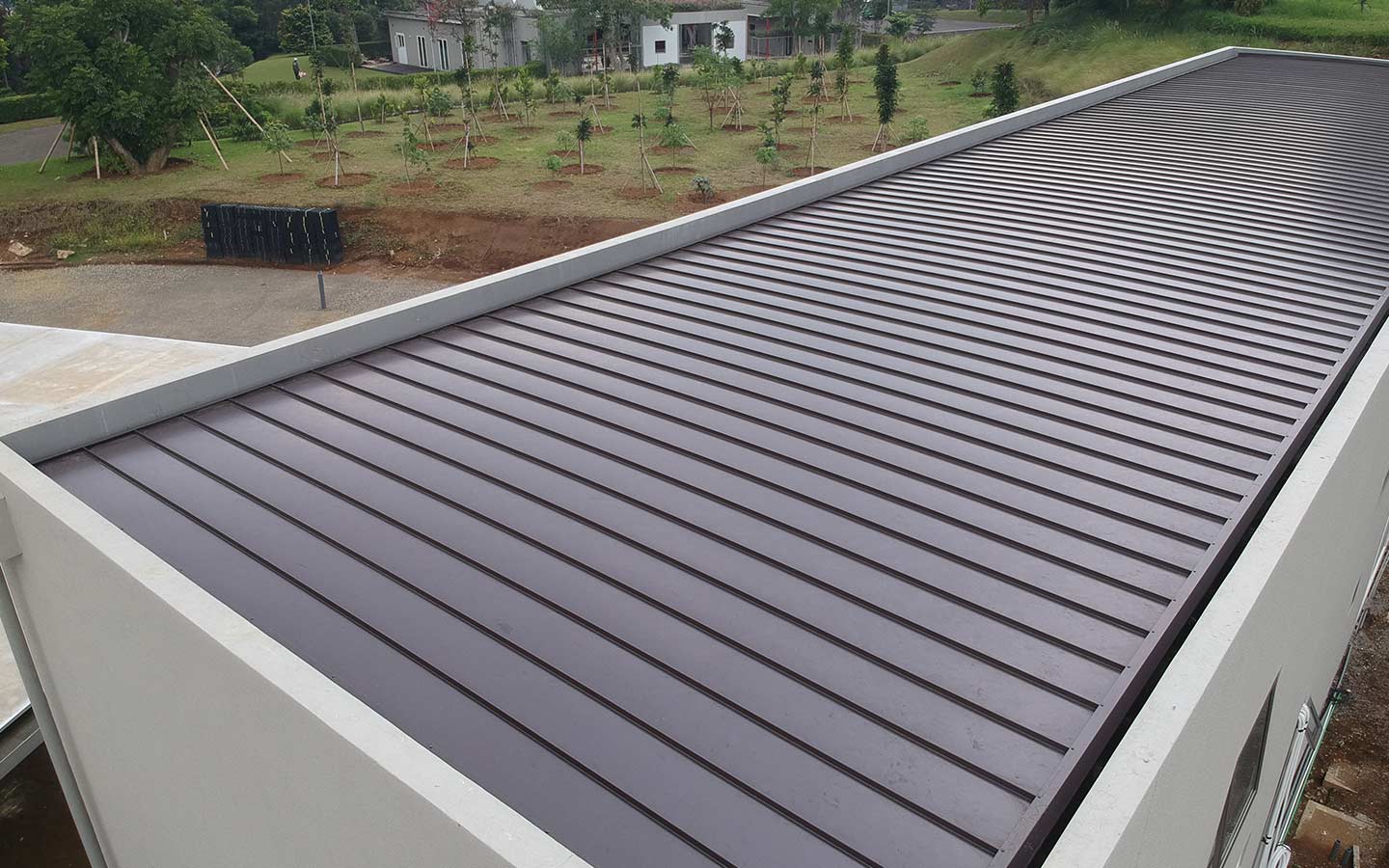
M. House, located on Jalan Sersan Bajuri in West Bandung Regency, incorporates COLORBOND® Steel in its low-profile roof design.
One of the defining characteristics of Art Deco architecture is the use of flat or low-profile roofs that reinforce the building's geometric composition.
In some buildings, roof edges incorporate parapets to create a strong and clearly defined facade silhouette.
As a reference for low-profile roof applications in contemporary residential architecture, M. House uses COLORBOND® Steel to establish a simple roof composition.
Although it is not classified as an Art Deco project, this approach provides a relevant example of horizontal plane articulation. Roof pitch, waterproofing, and drainage systems must still be carefully considered during the design process.
2. Curved Building Corners and Streamlined Forms
Art Deco architecture is also recognised for its rounded building corners and horizontal lines, which create a streamlined, aerodynamic appearance.
The streamline facade approach became particularly prominent in later Art Deco buildings, as architectural forms were increasingly influenced by developments in transportation and technology.
In contemporary construction, designing a curved facade requires careful coordination of curvature radius, supporting structural systems, and cladding material compatibility.
3. Ziggurat Forms and Stepped Geometry
A ziggurat is a stepped architectural form inspired by ancient Mesopotamian architecture.
In Art Deco architecture, stepped massing is commonly incorporated into building crowns, towers, and facade elements to create a monumental character.
This feature can be developed through variations in building height or stepped parapet compositions. Architects must carefully consider structural requirements, connections, and water management at intersections between architectural planes.
4. Glass Blocks and Geometric Ornamentation
Glass blocks are among the architectural elements found in certain Art Deco and Streamline Moderne buildings.
These materials allow natural light to enter interior spaces while introducing geometric patterns to wall surfaces.
In addition to glass, repeated linear patterns, zigzag motifs, and symmetrical compositions are used to emphasise the visual rhythm of facades.
In practical applications, facade articulation must account for opening proportions, lighting, connections, and material characteristics.
5. Contrasting and Expressive Colours
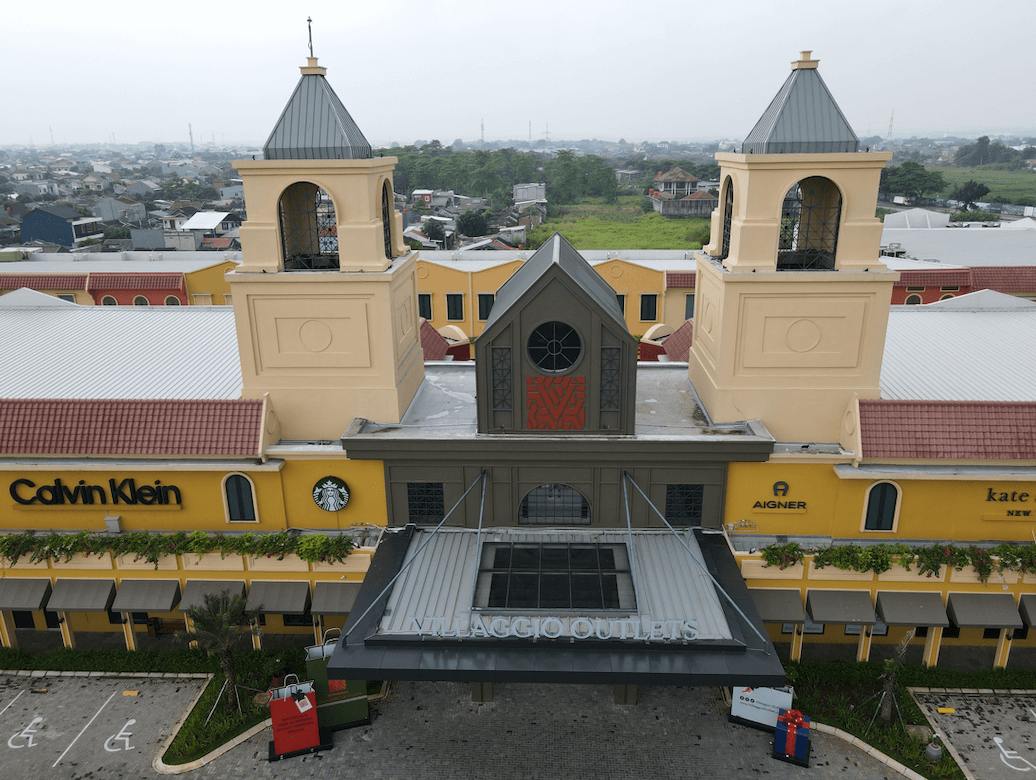
Villagio Outlet in Karawang, West Java, incorporates COLORBOND® Gull Grey and Armour Grey.
Art Deco architecture uses colour to emphasise architectural planes and decorative elements.
Neutral tones can be combined with bolder accents, such as red, green, or metallic finishes, to create distinctive focal points.
As a reference for colour applications in contemporary commercial architecture, Villagio Outlet in Karawang combines COLORBOND® Gull Grey and Armour Grey across its roof and wall surfaces.
Although the project is not classified as Art Deco architecture, it demonstrates how colour combinations and material profiles can establish a cohesive visual composition.
6. Combining Materials with Different Textures
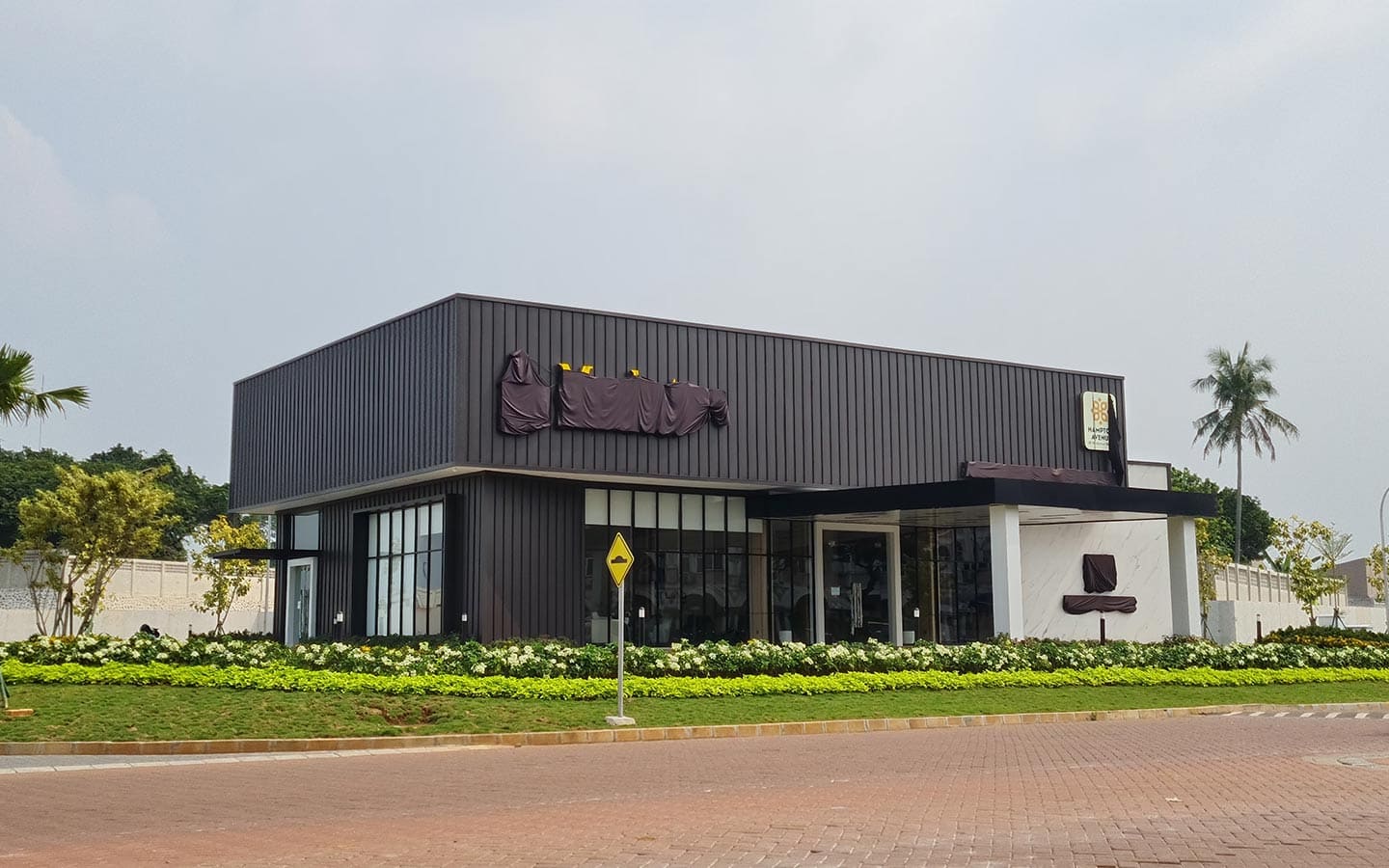
Manhattan Marketing Gallery in Tangerang incorporates COLORBOND® Matt Monument and COLORBOND® Granite.
Art Deco buildings frequently incorporate natural stone, glass, metal, wood, and decorative materials to create an elegant architectural character.
These combinations can produce visual contrasts between smooth surfaces, natural textures, and metallic elements.
As an example of contemporary material applications, Manhattan Marketing Gallery in Tangerang uses COLORBOND® Matt Monument and Granite on its facade to introduce variations in colour and texture.
In modern applications, material selection must consider building envelope performance, connection details, fastening systems, and maintenance requirements.
Examples of Art Deco Architecture in Indonesia
Art Deco architecture in Indonesia developed during the Dutch colonial period, particularly in public and commercial buildings throughout Bandung.
Several of these buildings remain important architectural references for understanding how Art Deco principles were adapted to local urban environments and climatic conditions.
1. Villa Isola, Bandung
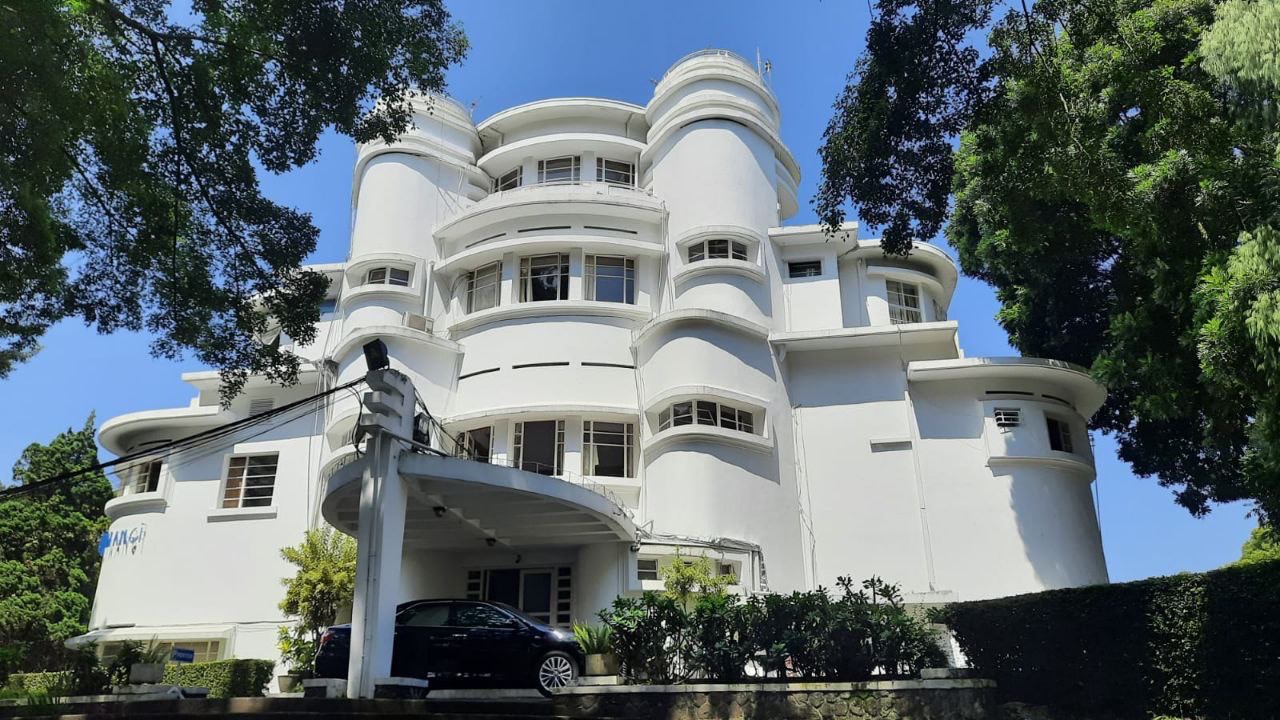
Example of Art Deco architecture in Indonesia.
Villa Isola is one of Indonesia's notable examples of Art Deco architecture, designed by C.P. Wolff Schoemaker.
The building features a composition of curved masses, stepped horizontal planes, and a strong relationship with its surrounding landscape.
Its geometric arrangement and architectural forms demonstrate how Art Deco characteristics can be integrated with modern architectural approaches.
2. Hotel Savoy Homann, Bandung
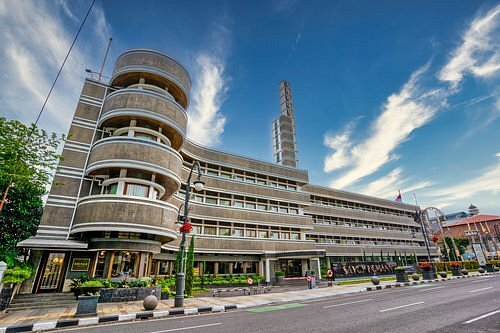
Example of Art Deco architecture in Indonesia.
Hotel Savoy Homann is an iconic building that displays the distinctive characteristics of Streamline Moderne architecture.
The design, associated with architect Albert Frederik Aalbers, is recognised for its curved facade, horizontal lines, and geometric composition that is both restrained and expressive.
The building illustrates how Art Deco design principles can establish a distinctive identity for commercial architecture.
3. Gedung Merdeka, Bandung
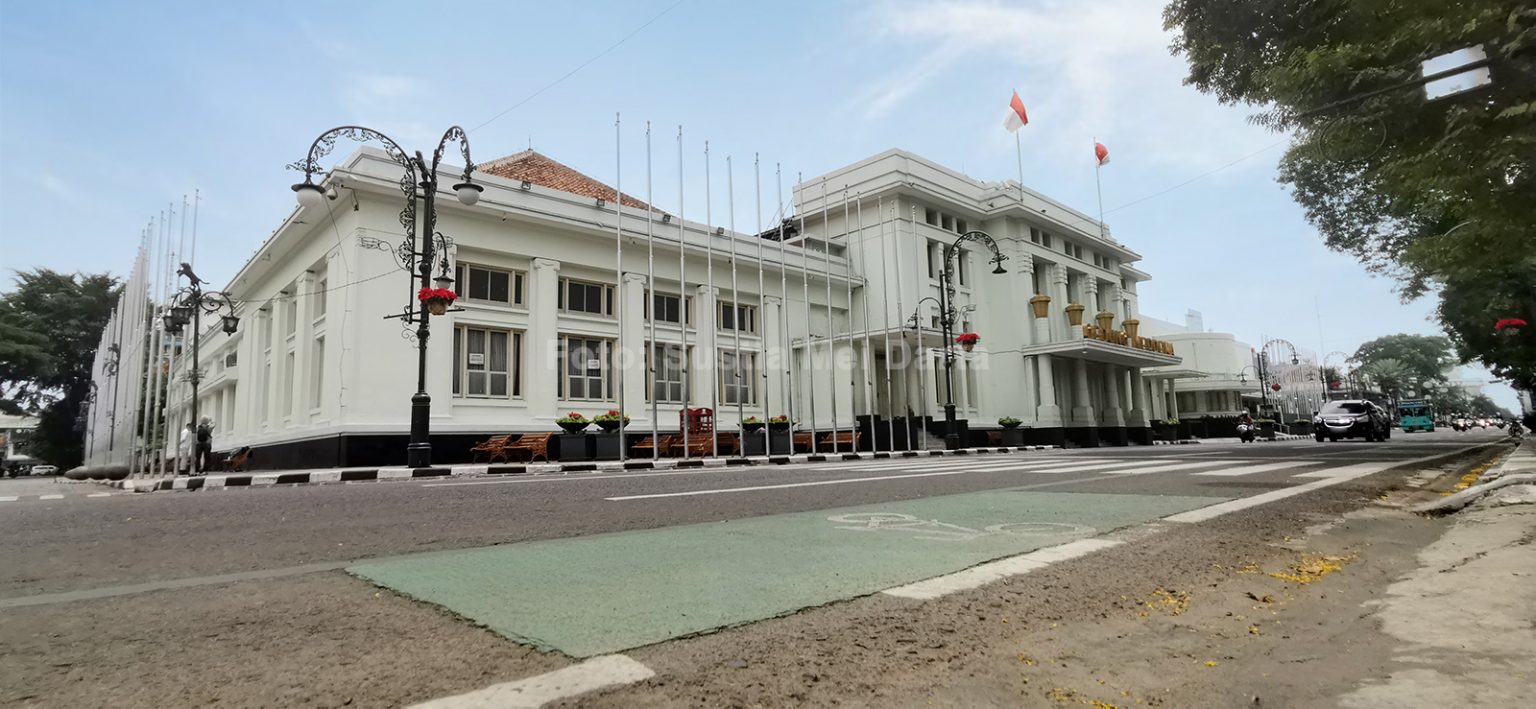
Example of Art Deco architecture in Indonesia.
Gedung Merdeka is a historic building associated with the development of modern and Art Deco architecture in Bandung.
Its facade characteristics can be examined through horizontal lines, architectural proportions, and the treatment of decorative elements.
As a heritage building, any maintenance or modification must consider its architectural significance and established conservation principles.
How Can Art Deco Design Be Applied to Modern Buildings?
Art Deco principles can be incorporated into contemporary residential and commercial buildings without reproducing every detail of historic architecture.
Several design approaches include:
-
Geometric facades: Incorporating repeated vertical or horizontal lines to strengthen the architectural composition.
-
Stepped forms: Exploring variations in building massing and parapet configurations as architectural features.
-
Curved accents: Introducing rounded corners into facades or entrance areas.
-
Contrasting colours: Combining neutral primary colours with accent tones on selected architectural planes.
-
Modern materials: Integrating glass, natural stone, and metal cladding according to building requirements.
For references on contemporary materials and building forms, architects can explore COLORBOND® commercial project inspirations.
Technical Considerations for Architects in Art Deco Design
Applying Art Deco architectural principles to contemporary buildings requires a balance between aesthetic expression and construction feasibility.
| Technical Parameter | Design Consideration |
|---|---|
| Stepped massing | Structural stability and connections between building masses |
| Streamline facade | Curvature radius and supporting framework |
| Geometric ornament | Proportions, modular dimensions, and installation |
| Parapet roof | Waterproofing and roof drainage |
| Metal cladding | Profiles, thickness, and fastening systems |
| Building envelope | Performance of roofs, walls, and openings |
| BIM coordination | Coordination of geometry and construction details |
For buildings incorporating complex architectural forms, architects and engineers must ensure that facade designs, structural systems, and materials can be implemented according to project specifications.
Bringing Art Deco Character to Life Through Modern Materials
Art Deco architecture demonstrates how geometry, colour, and materials can establish an elegant architectural identity. These principles remain relevant to the development of contemporary residential and commercial buildings.
Materials play an essential role in defining the character of Art Deco facades, particularly when designs incorporate combinations of geometric planes, colours, and textures.
In contemporary buildings, pre-painted metal materials can be considered for roofing and facade applications according to construction requirements.
COLORBOND® Steel can serve as a roofing and facade material option that supports architectural compositions through colour and form, while taking into account product specifications and construction requirements.
COLORBOND® Steel offers a range of profiles, colours, and coating systems that can support architectural design exploration.
With more than 60 years of experience, COLORBOND® Steel by BlueScope is recognised as a global brand of high-quality coated steel that continues to evolve through ongoing innovation.
COLORBOND® Steel provides industrial roofing solutions featuring Thermatech® technology, AZ150–AZ200 coatings, a super polyester paint system, and Clean Technology. The material is also supported by corrosion resistance warranties of up to 35 years and colour warranties of up to 12 years.
Architects can explore COLORBOND® commercial building products and COLORBOND® standard colours to identify suitable material alternatives for their architectural concepts.
Final material selection must consider environmental conditions, facade geometry, connections, and product-specific technical requirements.
To discuss suitable materials, colours, profiles, and their compatibility with your architectural design requirements, contact the COLORBOND® team.
Frequently Asked Questions About Art Deco
What is Art Deco?
Art Deco is an art and design style that emerged in the early 20th century, characterised by geometric forms, decorative ornamentation, contrasting colours, and expressive material applications.
What are the main characteristics of Art Deco architecture?
Its key characteristics include flat roofs with parapets, curved building corners, ziggurat forms, glass blocks, contrasting colours, and combinations of decorative materials.
What are some examples of Art Deco architecture in Indonesia?
Examples include Villa Isola, Hotel Savoy Homann, and Gedung Merdeka in Bandung, which demonstrate Art Deco characteristics through their architectural forms and facade compositions.
What is the difference between Art Deco and modern architecture?
Art Deco places greater emphasis on ornamentation and geometric expression, while modern architecture generally prioritises functionality, simplicity of form, and reduced decoration.
Is Art Deco suitable for modern houses?
Yes. Art Deco elements can be incorporated into modern residential design through geometric facades, curved details, colour combinations, and complementary materials without excessive ornamentation.
What materials are suitable for Art Deco architecture?
Natural stone, glass, metal, wood, and pre-painted materials can be used depending on the design character. Material selection should also consider functionality, building location, and construction systems.
References
-
Distinctive Features and Characteristics of Iconic Art Deco Architecture — Primary reference for the six defining characteristics of Art Deco.
-
Exploring the Concepts, Styles, and Characteristics of Modern Architecture — Reference for differences in modern architectural design approaches.
-
What Are the Distinctive Characteristics of Postmodern Architecture? — Reference for relationships between architectural styles and decorative elements.
-
M. House — Inspiration for low-profile roof applications.
-
Villagio Outlet — Application of COLORBOND® Gull Grey and Armour Grey.
-
Manhattan Marketing Gallery — Reference for colour and texture applications in modern facades.
-
Universitas Pendidikan Indonesia – Story of Villa Isola — History and architecture of Villa Isola.
-
Universitas Gunadarma – Art Deco Style in Bandung — Development of Art Deco architecture in Bandung and notable building examples.
COLORBOND® Products and Colours
-
COLORBOND® Commercial Products — Product options for commercial buildings.
-
COLORBOND® Standard Colors — Colour references for roof and facade design development.