15 Sep 2026
Types of Roofs for a Comfortable and Cooler Home
Types of Roofs for a Comfortable and Cooler Home
Share:


Roofs receive direct exposure to solar energy, making their design highly influential on the comfort of the spaces beneath them. Therefore, the desire to have a roof type that helps reduce heat should be translated into an effort to manage heat transfer through a coordinated system, rather than simply selecting a roofing material based on its appearance.
For COLORBOND® Steel metal roofing, heat management can be supported by surface reflectance, color selection, thermal insulation layers, roof-space ventilation, ceilings, and installation details. All of these elements work together to help reduce the amount of heat transferred toward the interior while maintaining the architectural character of the house.
This approach can be found in MG House, a finalist in the 2024 Steel Architectural Award, which uses a high-pitched gable roof and metal surfaces as part of the residential composition. The project demonstrates how roof design can support comfort while also becoming part of a building's visual identity.
What Is Thermal Insulation in a Residential Roof?
Thermal insulation is part of a building system designed to slow down heat transfer from the exterior toward the interior. In residential roofs, this layer is positioned and designed together with the roof covering, air cavity, ceiling, and ventilation so that heat received by the surface does not immediately transfer into the interior.
The performance of thermal insulation is influenced by the thickness and type of layer used, installation continuity, roof-cavity conditions, and connection details with the structure. Insulation should be considered as part of the home's passive design, together with building orientation, openings, shading, and ventilation. Various modern tropical house designs demonstrate the importance of coordinating these elements to create more comfortable spaces.
How COLORBOND® Metal Roofing Supports Heat Management
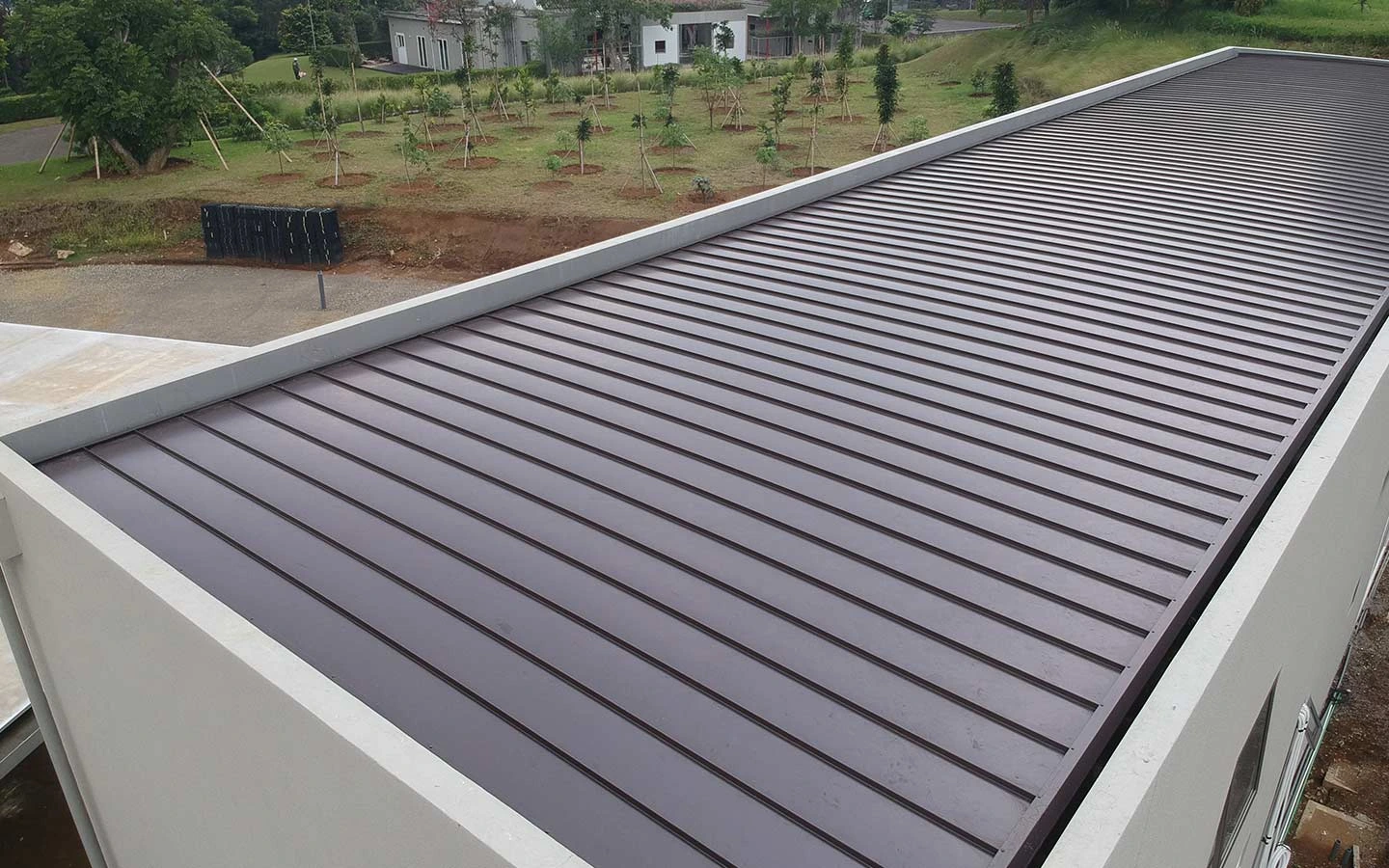
COLORBOND® Steel metal roofing does not function as a single layer. Material, color, surface technology, insulation, ventilation, and ceilings need to be designed as an integrated system to make heat management more effective.
1. Thermatech® Helps Increase Solar Reflectance
COLORBOND® Steel features Thermatech® Solar Reflectance Technology. This technology is designed to increase the reflectance of solar energy in selected colors, helping reduce the amount of heat transferred through the roof surface. As a result, the heat load that needs to be managed by the insulation layer and roof space can be reduced starting from the exterior surface.
Thermatech® still needs to be combined with thermal insulation, ventilation, and ceiling designs that are appropriate for the project conditions. This combination creates a layered strategy: the roof surface helps respond to solar energy, while the layers underneath slow down heat transfer toward the interior.
2. Roof Color Influences the Response to Solar Energy
Color is an important consideration when selecting a roof design that helps reduce heat. Each color has different reflectance characteristics, so its selection should take into account the orientation of the roof surface, solar exposure, façade concept, and thermal comfort targets. Various color references can be used to align technical requirements with the home's visual character.
Color selection should not be considered independently. Architects and homeowners need to consider its relationship with insulation, roof-space volume, ventilation, and openings. This integrated approach helps the roof remain relevant to the home's appearance without overlooking heat management.
3. Metal Panels Support a Coordinated Roofing System
Metal panels can cover large roof surfaces while creating orderly lines. This characteristic makes it easier to coordinate roof pitch, gutters, flashing, ventilation, and insulation layers. In modern tropical roof designs, roof surfaces can also be raised or provided with sufficient cavity space so that airflow and layer arrangements can be properly planned.
How to Optimize Thermal Insulation for COLORBOND® Steel Metal Roofing
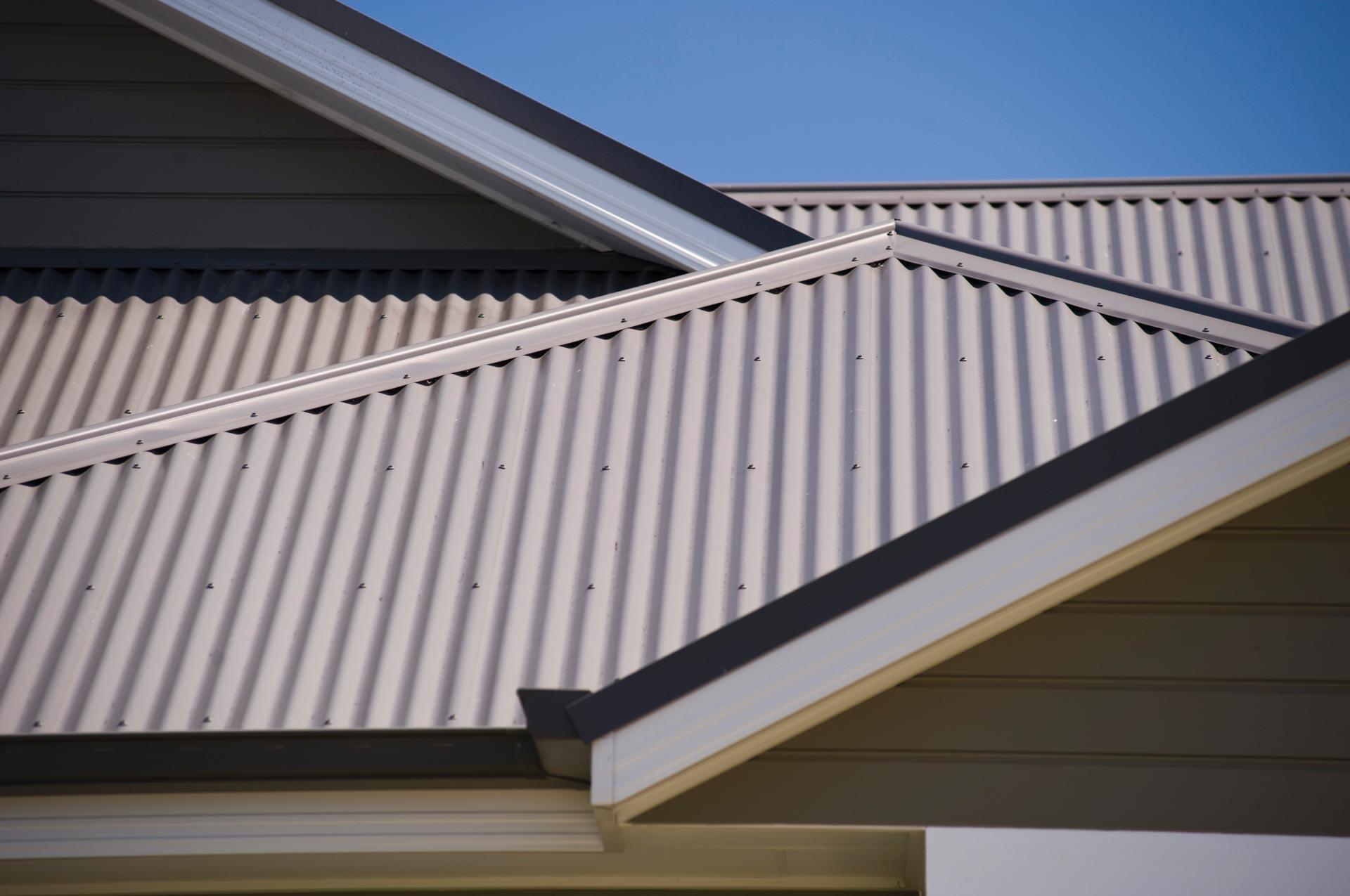
A more comfortable home requires planning from the design stage. The following aspects should be coordinated so that COLORBOND® Steel metal roofing and thermal insulation work as an integrated system.
1. Design the Roof Layer Assembly as a Whole
Determine the arrangement of the roof covering, membrane or supporting layer, thermal insulation, air cavity, and ceiling based on the building's conditions. Each layer needs to be installed continuously and properly detailed at joints, ridges, roof edges, and penetration areas.
Planning the layer arrangement from the beginning helps avoid uncontrolled gaps and facilitates coordination with the structural frame. At this stage, insulation thickness requirements and space for installations can also be considered so that they do not interfere with the interior composition.
2. Provide Ventilation in the Roof Space
Ventilation helps circulate air within the roof cavity so that heat does not accumulate in one area. Air intake and exhaust positions need to be designed according to the roof form, wind direction, and environmental conditions. A high-pitched gable roof, for example, can provide a volume of space that supports air movement when its openings are properly detailed.
Ventilation does not replace thermal insulation. The two have complementary functions: ventilation helps manage hot air within the roof cavity, while insulation slows heat transfer toward the ceiling and interior space.
3. Adjust Roof Pitch, Panel Length, and Drainage
Roof pitch, panel length, water-flow direction, gutters, fasteners, and flashing need to be designed according to the selected profile system. These details affect surface neatness, the number of joints, water management, and the continuity of the layers beneath the roof covering.
An example of metal surface coordination can be seen in M House. The orderly panel lines strengthen the minimalist composition and demonstrate how the roof can be designed as part of the home's overall geometry.
4. Select the System and Variant According to Project Conditions
Roofing material choices for residential applications need to be adjusted to the location, environmental conditions, building form, profile, and design requirements. COLORBOND® Steel is available in several variants: Ultra with ZINCALUME® AZ200, XAL with Aluminium Alloy 3105 H16, XPD with ZINCALUME® AZ150, XRW with ZINCALUME® AZ150, and Matte Finish with ZINCALUME® AZ150 and a low gloss level of 7 G.U.
The selection of variants should be discussed with the technical team so that the base layer, paint system, profile, and installation details are aligned with the project context. This ensures that decisions regarding thermal insulation are not separated from the material specifications and roof construction.
COLORBOND® Steel Metal Roofing Inspiration for Comfortable Homes That Help Reduce Heat
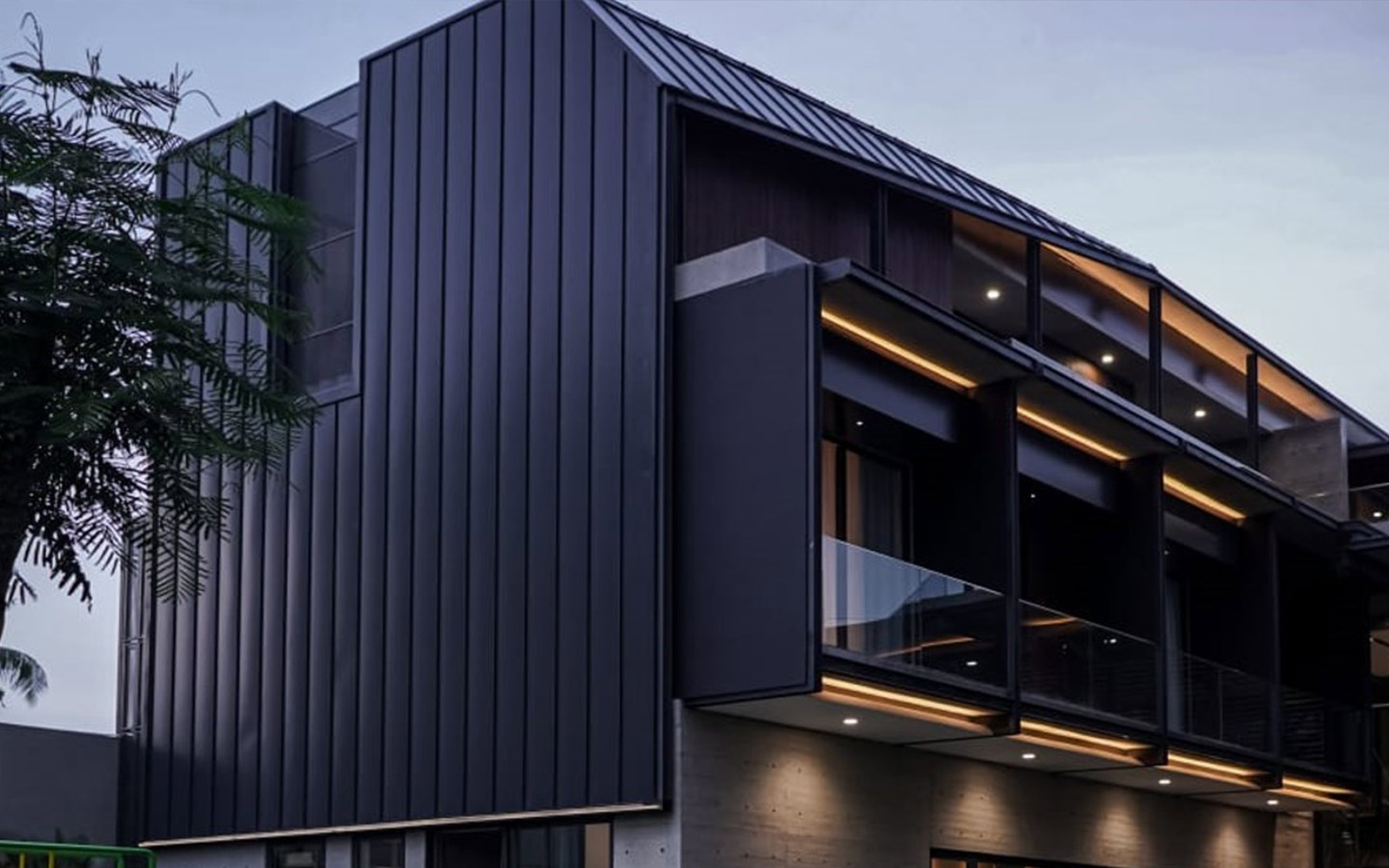
The application of COLORBOND® Steel metal roofing can be developed for various house forms, ranging from high-pitched gable roofs and single-slope surfaces to compositions that continue onto the façade. This flexibility helps architects integrate technical requirements with architectural expression.
At Private House Palembang, dark-colored metal material is used on the roof surface and vertical envelope. The panel lines help emphasize proportions and create a contemporary character. Its application demonstrates that dark colors can still form part of a design when considered together with surface technology and the building's heat-management system.
The principles of coordinating structure, panels, joints, drainage, and supporting layers can also be seen in various commercial projects. Although their scale and functions differ, these technical approaches remain relevant as references when designing residential roofs.
Advantages of COLORBOND® Metal Roofing in Supporting Comfortable and Cooler Homes
In tropical residential design, the roof is one of the building surfaces that receives significant solar exposure. Therefore, selecting a roof type that helps reduce heat needs to be considered together with insulation strategies, ventilation, roof pitch, and the overall building-envelope design.
COLORBOND® Steel features Thermatech® technology, a solar reflectance technology designed to help reflect more solar energy compared with similar colors without the technology. This characteristic can help reduce the amount of heat absorbed by the roof surface and support thermal comfort planning inside the home.
| Advantage | Application in Residential Design |
|---|---|
| Features Thermatech® technology | Solar reflectance technology helps reflect some solar energy, supporting heat-control strategies in buildings, particularly homes in tropical climates. |
| Supports thermal insulation strategies | COLORBOND® Steel can be combined with insulation layers, air cavities, ceilings, and roof ventilation systems to help create more comfortable indoor conditions. |
| Coating system for exterior applications | The COLORBOND® Steel coating system and technology are designed to accommodate outdoor environmental conditions while maintaining the material's intended function and appearance. |
| Clean Technology | This technology forms part of the development of COLORBOND® Steel, considering material performance and production processes for modern building applications. |
| Capable of covering large roof surfaces | Panels can be planned in longer spans, helping minimize the need for transverse joints across the roof surface and making installation more organized. |
| Relatively lightweight | Helps manage roof structural loads and can be considered when determining the structural framing and construction system of a home. |
| Flexible for various roof forms | Profiles can be applied to gable roofs, single-slope roofs, low-pitched surfaces, or combinations of geometries commonly used in modern and tropical architecture. |
| Supports both roof and façade design | The material can continue from the roof surface onto the façade, creating a more consistent architectural expression while helping form an integrated building envelope. |
Create a Comfortable and Cooler Roof with COLORBOND® Steel
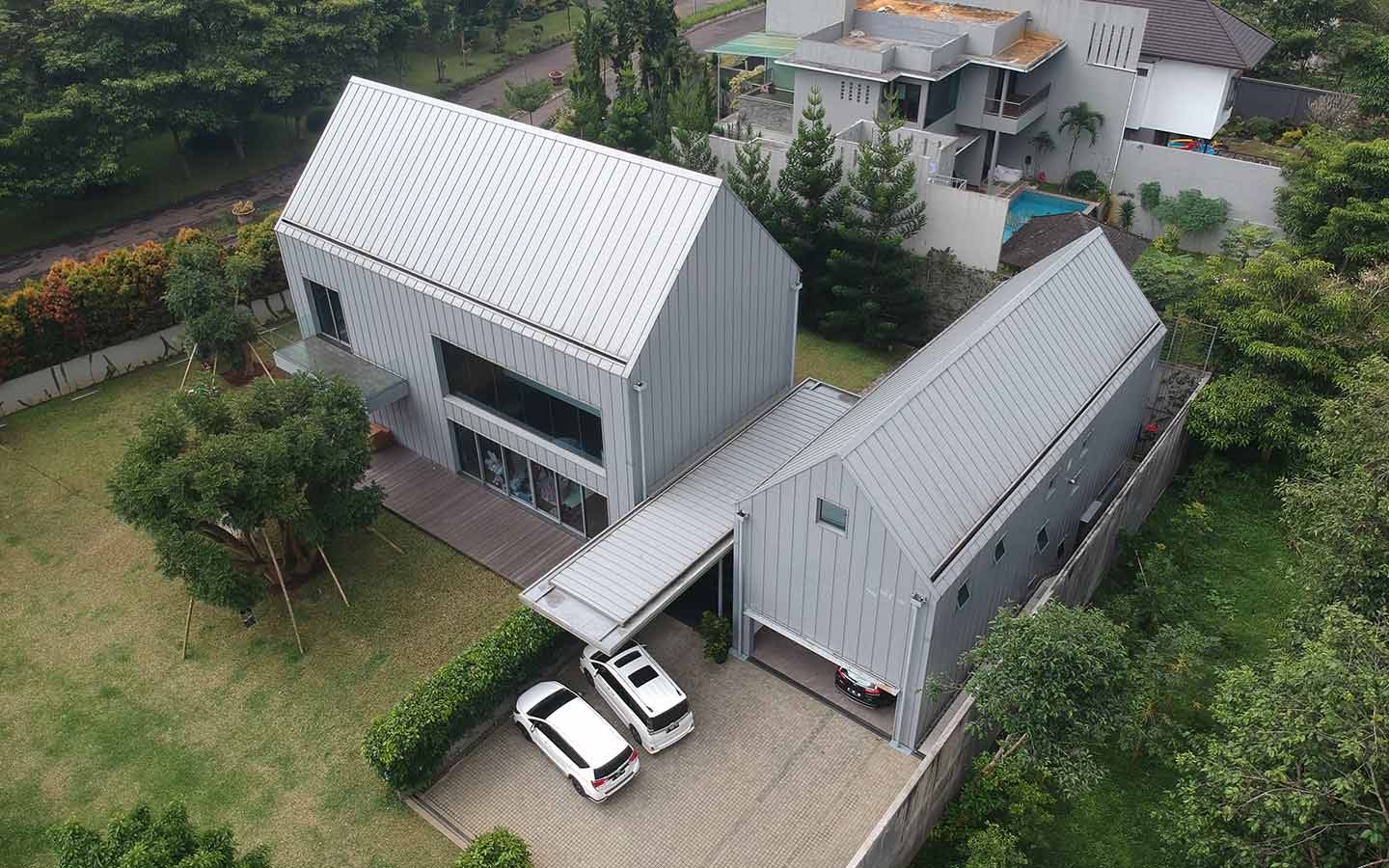
A roof type that helps reduce heat is not the result of a single component, but rather the coordination of the roof surface, color reflectance, thermal insulation, ventilation, ceiling, building form, and construction details. In a COLORBOND® Steel system, Thermatech® Solar Reflectance Technology helps manage solar energy at the surface, while insulation layers and the roof cavity help slow heat transfer toward the interior.
This year, COLORBOND® Steel marks 60 years as a global coated metal material brand from BlueScope, continuing to evolve in response to present and future needs.
The material features Thermatech® Solar Reflectance Technology, AZ150–AZ200 coatings, a super polyester paint system, and Clean Technology. The selection of profiles, colors, variants, fastening systems, insulation arrangements, and roof details can be discussed through technical consultation with the COLORBOND® Steel team according to project requirements.
FAQ
What is roof thermal insulation?
Roof thermal insulation is a layer within the roofing system that helps slow down heat transfer from the exterior surface toward the space below. This layer needs to be designed together with ventilation, air cavities, and the ceiling.
Can COLORBOND® metal roofing help keep a home cooler?
COLORBOND® Steel features Thermatech® Solar Reflectance Technology, which helps increase solar energy reflectance in selected colors. For more effective results, the material needs to be combined with appropriate thermal insulation, ventilation, ceiling, and installation details.
What is the function of Thermatech® in COLORBOND® Steel roofing?
Thermatech® Solar Reflectance Technology is designed to help increase solar energy reflectance in selected colors, thereby reducing the heat transferred through the roof surface.
Does roof color affect a home's thermal comfort?
Yes. Colors have different reflectance characteristics. Their selection needs to be aligned with roof orientation, solar exposure, surface technology, insulation, ventilation, and the façade concept.
Is ventilation still necessary if insulation is already installed?
Yes. Ventilation helps circulate air within the roof cavity, while insulation slows heat transfer toward the ceiling and interior. The two perform different but complementary functions.
What should be considered when installing insulation on a metal roof?
Consider layer continuity, the thickness specified in the design, joint areas, penetrations, ventilation space, ceiling position, and coordination with the structural frame, fasteners, flashing, and gutters.
References
- References to the 2024 Steel Architectural Award finalists from the COLORBOND® website
- MG House
- Related articles from the COLORBOND® Steel website
- Characteristics of Tropical Architectural Roofs
- M House
- Private House Palembang