21 Sep 2026
Gelora Bandung Lautan Api: When the Roof Shapes Modern Stadium Architecture
Gelora Bandung Lautan Api: When the Roof Shapes Modern Stadium Architecture
Share:


In modern stadium architecture, the roof is no longer viewed merely as an element that provides shelter over the stands. Its wide span, geometric form, and material selection can become important parts of a stadium's identity.
This approach can be seen at Gelora Bandung Lautan Api Stadium, or GBLA, one of the large-scale sports facilities that forms part of the urban landscape of Bandung.
With its large capacity and monumental building composition, GBLA requires an architectural solution capable of bringing together the functional needs of a sports facility with its visual expression. One of the most recognizable elements is its roof, which spans across and follows the shape of the stadium.
This approach is closely related to modern stadium structural design that combines wide spans and steel materials, particularly when spectator areas require protection without compromising visual openness toward the field.
Modern Stadiums Require More Than Just a Large Structure
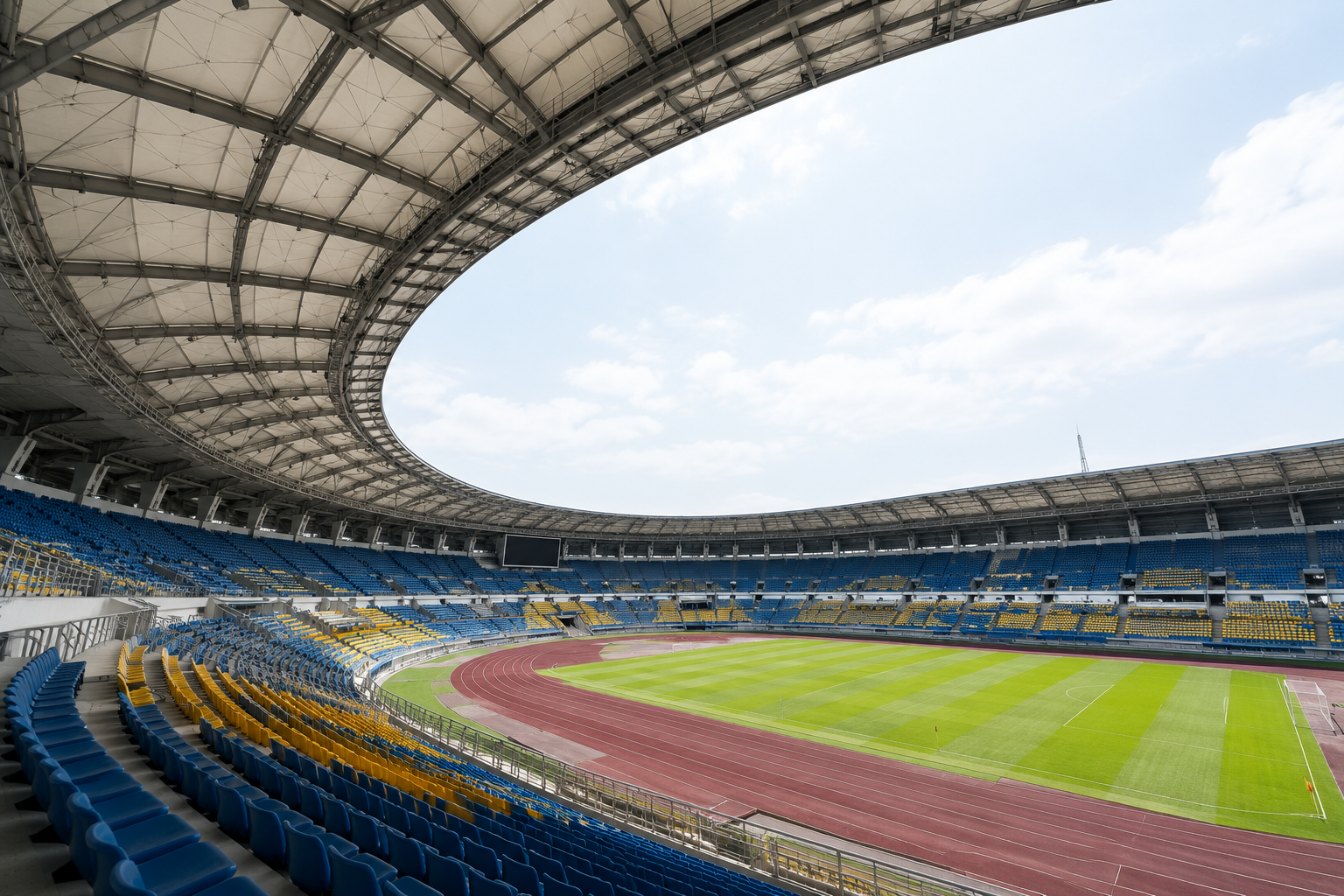
Designing a stadium is different from designing a commercial building or a smaller-scale public facility. Thousands of users may occupy the building simultaneously, while the competition area needs to maintain good visual openness.
These conditions mean that modern stadium architecture requires coordination between the structure, stands, circulation, roof, and various supporting facilities.
1. Wide Spans Shape the Experience Inside the Stadium
One of the main characteristics of a stadium is the need to create a large area with minimal visual obstruction.
In the spectator stands, the audience's view toward the field needs to be an important consideration in the design. Therefore, the roof structure must be designed to provide shelter for spectators while following the planned spanning system.
The roof is therefore not simply a separate element placed above the stadium. Its form is directly related to the building mass, primary structure, and user experience within the building.
A similar approach can be seen at GOR Djarum Magelang as a reference for sports facilities, which demonstrates how the roof can become part of the overall character of a sports facility.
2. The Roof Becomes Part of the Architectural Identity
When viewed from a distance, the roof is often one of the first elements that reveals the character of a stadium.
This can be seen at Gelora Bandung Lautan Api. The roof follows the oval composition of the stadium and creates a horizontal line that emphasizes the scale of the building. From an architectural perspective, this approach demonstrates how the building envelope can contribute to the overall expression of the design.
This is one of the characteristics commonly found in modern stadium architecture, where structure and materials are not hidden from the design but instead become part of the building's visual language.
Various infrastructure project references with different material and design approaches also demonstrate how roof solutions can be adapted to the character of each building.
Roof Materials Need to Follow the Character of the Stadium Project
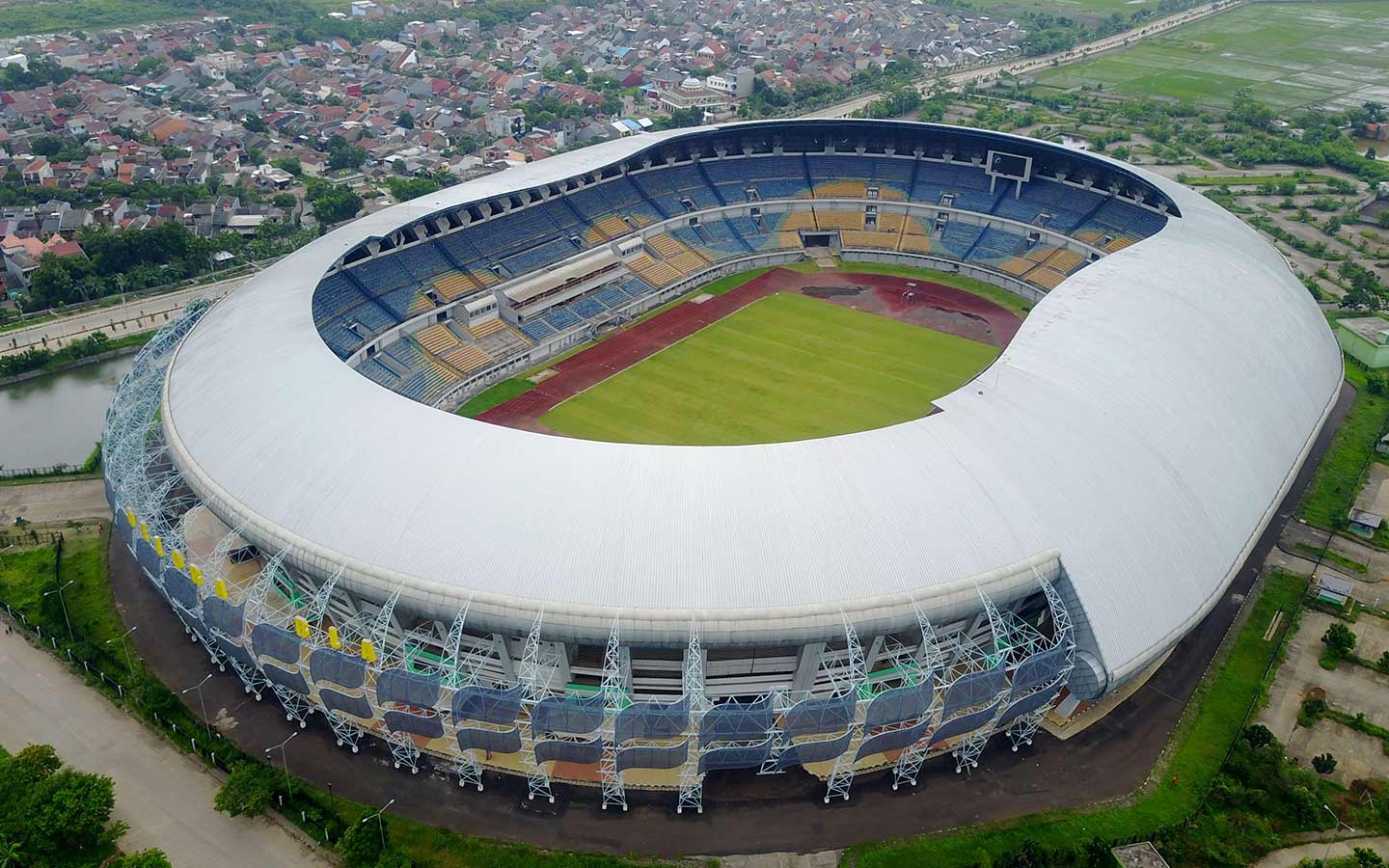
Every stadium has different conditions. Location, environmental exposure, roof area, structural form, panel profile, and aesthetic requirements can all influence material specifications.
Therefore, projects such as Gelora Bandung Lautan Api can serve as a reference for the use of COLORBOND® Steel in large-scale sports facilities, while material specifications for other stadiums still need to be determined based on the requirements of each project.
In this context, materials for infrastructure projects need to be considered according to the building's characteristics and the environment in which the project is located.
1. Environmental Conditions Determine the Specifications
Location is one of the key factors when selecting materials for modern stadium architecture.
Buildings located in urban areas experience different exposure conditions compared with stadiums built near coastal areas, industrial zones, or environments with specific levels of corrosivity.
These differences need to be considered during the specification stage. The base substrate, paint system, panel profile, connection details, and installation methods can then be coordinated with the environmental conditions of the project.
2. Roof Profile and Geometry Cannot Be Separated
In stadiums, roof areas can reach a very large scale. Therefore, material selection needs to be carried out together with planning for the profile system and supporting structure.
Panel length, installation direction, roof pitch, joints, flashing, and drainage systems all form part of a single design approach.
This approach allows the material to function as part of the architectural system rather than simply serving as the final layer of the building.
COLORBOND® Steel Options for Stadiums and Wide-Span Buildings
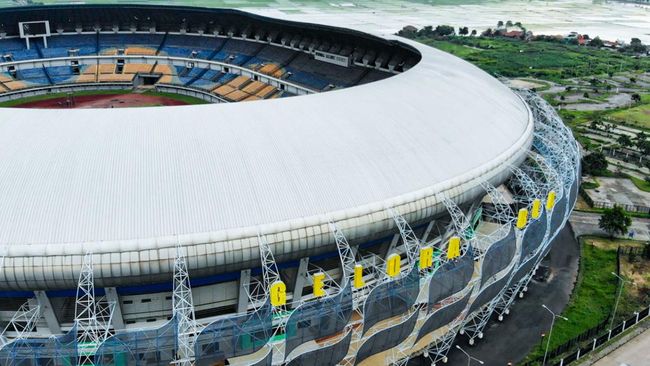
At Gelora Bandung Lautan Api Stadium, COLORBOND® Steel is used as part of the roofing system.
The use of metal panels across large surfaces allows the roof lines to consistently follow the geometry of the stadium. This pattern helps create a more organized visual surface while strengthening the building's character when viewed from a distance.
COLORBOND® Steel is currently available in several options that can be considered for stadium projects and other wide-span buildings.
Selection should be based on the location, environmental conditions, design requirements, profile system, and technical specifications of the building. In addition to material characteristics, standard color options for architectural applications can also be considered to ensure that the roof surface complements the building's visual composition.
1. COLORBOND® XRW Steel
COLORBOND® XRW Steel uses a ZINCALUME® AZ150 substrate. This variant can be one of the options for architectural projects requiring roofing or wall materials with color choices that can be integrated into the building's composition.
In stadium projects, visual aspects are particularly important because the roof surface can be visible from considerable distances. Color, panel direction, and material profile can therefore become part of the architectural expression.
2. COLORBOND® XPD Steel
COLORBOND® XPD Steel also uses a ZINCALUME® AZ150 substrate and can be considered for various commercial and infrastructure projects.
In modern stadium architecture, materials such as this can be evaluated together with profile systems to create consistent roof surfaces across large spans.
However, selection still needs to consider the overall project details, from location to the construction system being used.
3. COLORBOND® Ultra Steel
For projects located in environments with higher levels of corrosivity, COLORBOND® Ultra Steel can be one of the options to consider.
This variant uses a ZINCALUME® AZ200 substrate. Its specifications make COLORBOND® Ultra Steel relevant for projects exposed to more aggressive environmental conditions, including certain locations closer to coastal areas.
This means that selecting Ultra is not determined solely by the type of building. A stadium in an urban environment and one in a coastal area may require different material considerations.
GBLA Demonstrates the Role of the Roof in Modern Stadium Architecture
Gelora Bandung Lautan Api demonstrates how a stadium can function both as infrastructure and as an urban landmark. The strength of its design emerges when the building mass, roof, stands, structure, and materials are understood as a single system.
For architects, modern stadium architecture requires cross-disciplinary coordination from the early stages. The structure needs to support spectators' viewing quality, the roof needs to respond to spanning requirements, materials need to be adapted to project conditions, while the façade and colors contribute to the building's visual identity.
This approach ensures that the design goes beyond simply creating a recognizable form. Architectural value emerges when the building's expression works together with its function, construction, and user experience.
Two Steel Architectural Award 2024 finalists can provide interesting pointers for architects:
- Jakarta International Stadium demonstrates how the roofing system can become an important part of the experience of a large-scale stadium.
- Indonesia Arena demonstrates the relationship between wide spans, spectator stands, structure, and architectural expression in an indoor arena. Both projects expand the way modern stadium architecture can be understood through different requirements and scales.
Cross-project comparisons such as these help architects understand that an iconic form should ideally emerge as a consequence of interconnected structural, functional, circulation, and spatial experience considerations.
For stadium projects and wide-span facilities entering the specification development stage, requirements regarding profiles, colors, and material applications can be discussed through project specification consultation with the COLORBOND® Steel team.
FAQ
Does Gelora Bandung Lautan Api use COLORBOND® Steel?
Yes. Project information states that COLORBOND® Steel is used at Gelora Bandung Lautan Api Stadium. However, the specific COLORBOND® Steel variant used is not stated.
Does GBLA use COLORBOND® XRW, XPD, or Ultra?
There is no project information specifically stating that GBLA uses XRW, XPD, or Ultra. These three variants are more appropriately discussed as material options for stadium projects or other wide-span buildings based on their respective requirements.
How do you choose COLORBOND® Steel for a stadium project?
The selection of the appropriate variant needs to consider the project location, environmental conditions, level of corrosivity, roof form and area, profile used, installation system, and the building's visual requirements.